
Data Engineering Courses
Top 3 Data Engineering Courses for 2026
Ranked by learner rating across our 47 Data Engineering programs
Rank #1

Build With LLMs: From Context Engineering to Multi-Agent Systems
Cohort starts: 28th Oct ’26 11 Days Left

Rank #3

Professional Certificate Course in AI-Powered Data Analytics
Cohort starts: 22nd Oct ’26 5 Days Left
Empowering Millions Through Professional Learning
- switchup4.6
- Trustpilot4.6Excellent
- Course Report4.5
Data Engineering Skills You Will Build
The core capabilities you’ll practice across Data Engineering programs
- CI CD Pipelines
- Containerization
- Deployment Strategies
- Infrastructure as code
- Infrastructure Design and Implementation
- Microservices
- Monitoring and Logging
- Multipipeline workflows
- Serverless Computing
- Testing and Security Integration
- Data exploration
- Data visualization
- Data wrangling
Universities and Technology Partners Behind These Programs



Build With LLMs: From Context Engineering to Multi-Agent Systems
- 4.8 out of 5
- 300+ learners
- 8 weeks
Cohort starts: 28th Oct ’2611 days left
- Intermediate to advanced
- Live cohort
View more about Build With LLMs: From Context Engineering to Multi-Agent Systems
Build With LLMs: From Context Engineering to Multi-Agent Systems is a live cohort certificate program offered with Carnegie Mellon University (CMU), rated 4.8 out of 5 by 300+ learners. Runs 8 weeks. Best for experienced practitioners.
Professional Certificate Course in AI-Powered Data Analytics
- 4.8 out of 5
- 5K+ learners
- 7 months
- Intermediate to advanced
View more about Professional Certificate Course in AI-Powered Data Analytics
Professional Certificate Course in AI-Powered Data Analytics is an online certificate program offered with E & ICT Academy, IIT Kanpur, rated 4.8 out of 5 by 5K+ learners. Runs 7 months. Best for experienced practitioners.
Professional Certificate in Data Analytics & GenAI
- 4.6 out of 5
- 400+ learners
- 30 weeks
- Intermediate to advanced
View more about Professional Certificate in Data Analytics & GenAI
Professional Certificate in Data Analytics & GenAI is an online certificate program offered with UC Santa Barbara Professional and Continuing Education, rated 4.6 out of 5 by 400+ learners. Runs 30 weeks. Best for experienced practitioners.
Professional Certificate Program in AI-Powered Data Analytics
- 4.9 out of 5
- 5K+ learners
- 7 months
- Intermediate to advanced
View more about Professional Certificate Program in AI-Powered Data Analytics
Professional Certificate Program in AI-Powered Data Analytics is an online certificate program offered with IITM Pravartak, rated 4.9 out of 5 by 5K+ learners. Runs 7 months. Best for experienced practitioners.
Agentic AI: Business Strategy and Adoption
- 4.5 out of 5
- 200+ learners
- 8 weeks
Cohort starts: 5th Nov ’2619 days left
- Intermediate to advanced
- Live cohort
View more about Agentic AI: Business Strategy and Adoption
Agentic AI: Business Strategy and Adoption is a live cohort certificate program offered with Columbia Engineering Executive Education - SL, rated 4.5 out of 5 by 200+ learners. Runs 8 weeks. Best for experienced practitioners.






Data Engineering Overview
Most data engineering courses online build the same core foundation:
-
SQL for joins, aggregations, and building dependable data transformation workflows
-
Python for data workflows and practical data handling (you can build this base through a Python data workflow course)
-
Distributed processing with Apache Spark for big data and large-scale transformations
-
Cloud computing basics across AWS and Azure, including core cloud services and NoSQL options such as MongoDB for specific workloads
Many roles also expect you to explain results clearly, so data visualization skills using tools like Tableau dashboard training or Power BI reporting training can help.
These data engineering programs are a strong fit for data professionals, including software developers, business analysts, and analysts who want to build reliable datasets (not just consume reports), and database professionals adapting to cloud-scale systems. They also help product and analytics leaders understand platform limits, trade-offs, and what it takes to deliver “clean data” to the business.
The best data engineering courses are designed to build essential skills and take learners from a baseline of technical literacy to job readiness. You do not need to be an expert to start, but a few basics help, like:
-
Coding Fundamentals: You should be comfortable reading and writing code in at least one of the common programming languages used in data work. Python programming is the industry standard for data tasks, so if you understand loops and functions, you are ready.
-
Database Literacy: Understanding database management, data structures, and how data is stored in relational databases is essential. You should know the difference between rows and columns because familiarity with SQL is a significant advantage.
-
Command Line Skills: Data engineering often occurs in a terminal environment, so knowing how to navigate a Linux file system is crucial.
-
Educational Background: A degree in Computer Science is common but not mandatory. Some of our successful learners come from diverse backgrounds, including mathematics and economics.
Know more about Data Engineering Courses
Data pipelines make it possible for everything from dashboards to AI features to work. You learn how to collect, clean, and store raw data (like logs, payments, clicks, and device signals) in data engineering courses so that teams can use it with confidence. The goal is to make pipelines that keep working as data grows, not just write more scripts.
You also learn how teams make sure that data stays the same when a lot of people look at it at the same time. Tools like Apache Iceberg and Delta Lake make object storage more stable. Data governance and data management are taught early on because access control, data lineage, and change tracking stop messy rework later on.
Market Demand and Industry Relevance of Data Engineering Courses
The data engineering field is expanding rapidly as companies need faster data. Retailers cannot afford slow inventory updates, and banks need quick alerts to catch fraud in time. That is why more pipelines are moving from overnight batch jobs to streaming and continuous updates on cloud platforms. Gartner forecasts worldwide IT spending will hit $6.15 trillion in 2026 (up 10.8% from 2025).
LinkedIn reports at least 1.3 million AI-related job opportunities were created in the past two years, increasing demand for reliable, well-governed data foundations.
Career Scope and Professional Opportunities After Data Engineering Courses
Many people start by fixing broken pipelines: duplicates, slow dashboards, and unclear metrics. Over time, you can move into platform roles, grow into a big data engineer position, or transition into analytics engineering focused on turning raw tables into clean business metrics. With experience, you can grow into a data architect role, learning when streaming is worth it and how to design datasets that stay usable across teams.
Why Choose Simplilearn for Data Engineering Courses
A strong path combines structure, practice, and support. With guided learning and hands-on work, you move from learning tools to building reliable data pipelines and dependable data systems teams can trust, exactly the kind of capability hiring teams look for.
Connect with our learning consultant to get all your questions answered about programs, faculty, and more
Tools and Platforms Used in Our Data Engineering Courses
Get hands-on with the platforms and tools covered across our Data Engineering programs











.png)






Recommended Learning Materials for Upskilling
Explore free webinars, tutorials, career guides, and practical reads to go deeper
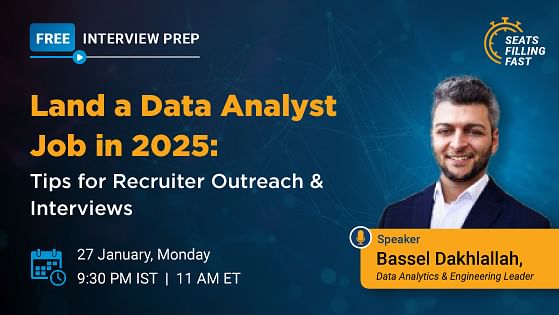
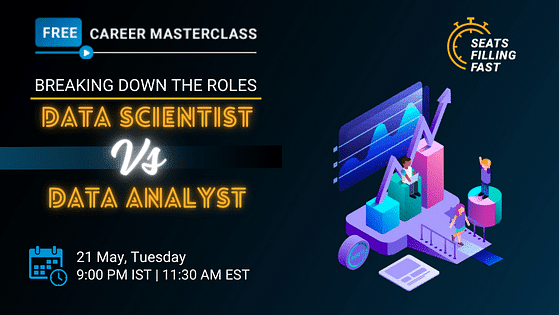
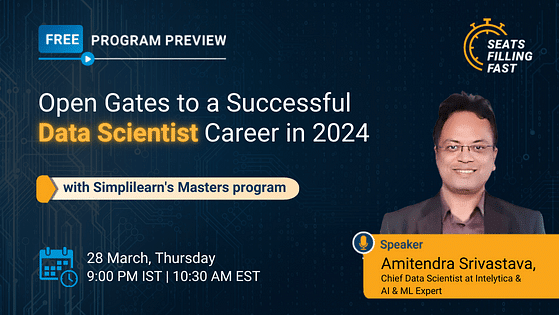
Upcoming Webinars - Free Masterclasses
Articles and Ebooks That You Can Access For Free


Data Engineering Courses: Frequently Asked Questions
These fields work together, but they have very different goals. Data engineering courses teach you how to make systems that are both reliable and scalable. Data science courses, on the other hand, teach you how to get insights from data and make models that can predict what will happen.
Let's think of data departments in businesses as kitchens. The data engineer builds the building, putting in the heavy appliances and filling the pantry with food so that it is easy to find. A data scientist is like a chef who uses those tools and ingredients to make a certain dish. One is all about fault tolerance and latency, and the other is all about statistics and algorithms.
You should evaluate the return on your investment of time and money.
|
Factor |
What to Look For |
|---|---|
|
Modern Curriculum |
Does it cover Lakehouse, Spark, and Streaming? Avoid courses stuck on legacy Hadoop MapReduce. |
|
Practitioner Instructors |
Look for teachers who work in the industry. You want the latest skills, not only theory. |
|
Project Depth |
Ensure there are complex capstones. You can't learn engineering by watching videos. |
Employers want to see that you can do the job, so they care more about your skills than the institute. A certificate from a structured online program shows that you are disciplined, but the portfolio of projects you do is usually more important. A GitHub repository with working code is a better way to show off your skills than a transcript.
Providers like us make sure that the programs are in line with internationally recognized certifications. This means that a student in London learns the same AWS configurations as a student in Singapore. Because of this standardization, your skills can be used anywhere. Online data engineering courses will teach you how to use the newest tools and ideas because technology changes faster than regular college classes can keep up.
These credentials serve as an effective bridge for career switchers.
-
Software Developers with a software development background already possess coding skills. A certification fills the gaps regarding distributed systems and data architecture, proving you can apply your programming knowledge to data-specific challenges.
-
Data Analytics: You understand the business value of data analysis. The certification gives you the technical capability to build your own infrastructure, validating that you have mastered the engineering rigor needed to manage production systems.
Earning a certification demonstrates serious intent to potential employers, showing that you have invested time and effort to acquire the necessary skills for the new role.

*All salary figures referenced are based on data reported by employees on Glassdoor. These figures are estimates and may vary depending on location, experience level, company policies, and market conditions. Actual compensation may differ.