AI Developer Roadmap
Step-by-Step Career Roadmap Guide to Get Job Ready
AI Developers turn business problems into intelligent products by building applications that can predict, generate, automate, personalize, and learn from data. And if you want a career in which what you build today is relevant five years from now, this is a strong bet.
AI Developers turn business problems into intelligent products by building applications that can predict, generate, auto...
1.3M+
$141,000

Top Industries
Hiring AI Developers
98%
Job Satisfaction
What Does an AI Developer Do and Why Do Businesses Need Them?
AI Developers turn raw AI capabilities into real products, like chatbots, search tools, recommendation engines, and workflow agents. Without them, businesses may have models and experiments, but not stable, production-ready systems that actually deliver value.
AI Developers turn raw AI capabilities into real products, like chatbots, search tools, recommendation engines, and workflow agents. Without them, businesses may have models and experiments, but not stable, production-ready systems that actually deliver value.

Data Preparation & Evaluation
Prepare datasets, test models, and refine outputs often
RAG & Retrieval Systems
Build RAG pipelines that ground outputs in company data
LLM and API Integration
Connect LLMs, vector DBs, APIs, and app logic with ease
AI Deployment and Optimization
Deploy AI systems and improve cost, accuracy, and scale
Who Is This Career For?
AI Developer is the career for you, if you are:

Python-Proficient Developer
For developers with Python, REST API, and backend skills who want to build practical AI applications
Data Professional Looking to Build
For data analysts, data scientists, or ML practitioners moving into production AI application builds
Curious Builder & Problem Solver
For curious AI tool users ready to move beyond prompts and build their own AI-powered product ideas

Recommended Courses




AI Developer Salary Snapshot
Compensation* grows significantly as you progress through your AI developer career.
$95,000 – $176,000
+12% Annually
Entry-Level AI Developer
$132,000 – 195,000
+15% Annually
Mid-Level AI Developer
$221,000 – 376,000+
+18% Annually
Senior / Lead AI Developer
Entry-Level AI Developer
$95,000 – $176,000
Mid-Level AI Developer
$132,000 – 195,000
Senior / Lead AI Developer
$221,000 – 376,000+
*Salary figures based on data from Glassdoor (Mar 2026, 858+ submissions), BLS Occupational Outlook, and LinkedIn Jobs Report.
Step-By-Step AI Developer Roadmap
A comprehensive guide to skills, responsibilities, and expectations at each career level.
Who This Is For
CS or related degree graduates entering AI application roles
Career switchers from software or data analytics entering AI
Junior developers specializing in AI application development
CS or related degree graduates entering AI application roles
Career switchers from software or data analytics entering AI
Junior developers specializing in AI application development
Role Outcomes
Create AI-driven product capabilities using modern tools and APIs
Ship a working AI chatbot or content generator from prototype to staging environment
Write prompts that guide AI to produce better results
Learn the basics behind LLMs, embeddings, and context
Tool Stack






.png)
Technical Skills
Python Proficiency (OOP, async)
LLM API Usage (OpenAI, Anthropic)
Basic ML Literacy
REST API Integration
Token Management & Cost Control
Python Proficiency (OOP, async)
LLM API Usage (OpenAI, Anthropic)
Basic ML Literacy
REST API Integration
Token Management & Cost Control
+ 4 more skills
Soft Skills
AI Use Case Identification
Hallucination Detection
Time Management
Technical Documentation
Edge-Case Testing Mindset
AI Use Case Identification
Hallucination Detection
Time Management
Technical Documentation
Edge-Case Testing Mindset
Example Deliverables

AI Customer Support Bot
Build an AI FAQ bot with LLM APIs, source citations, knowledge base retrieval, and fallback handling
Prompt Engineering Library
Curate 15+ tested prompts with benchmarks, cost estimates, and edge-case notes for repeatable AI use
Simple RAG Prototype
Build a PDF Q&A app with chunking, embeddings, cited answers, and reliable source passage retrieval
KPIs
Response Accuracy Rate
API Latency & Cost per Query
User Satisfaction (CSAT)
Deployment Success Rate
Hallucination Rate
Prompt Reuse Rate
Interview Checkpoint
How would you build a customer-support chatbot that answers questions from a company’s knowledge base without hallucinating?
Explain how you’d manage token limits when a user sends a very long document for summarization.
How would you validate and monitor AI-generated outputs to ensure accuracy, safety, and a good user experience in production?
CS or related degree graduates entering AI application roles
Career switchers from software or data analytics entering AI
Junior developers specializing in AI application development
CS or related degree graduates entering AI application roles
Career switchers from software or data analytics entering AI
Junior developers specializing in AI application development
Create AI-driven product capabilities using modern tools and APIs
Ship a working AI chatbot or content generator from prototype to staging environment
Write prompts that guide AI to produce better results
Learn the basics behind LLMs, embeddings, and context
Python Proficiency (OOP, async)
LLM API Usage (OpenAI, Anthropic)
Basic ML Literacy
REST API Integration
Token Management & Cost Control
Python Proficiency (OOP, async)
LLM API Usage (OpenAI, Anthropic)
Basic ML Literacy
REST API Integration
Token Management & Cost Control
+ 4 more skills
AI Use Case Identification
Hallucination Detection
Time Management
Technical Documentation
Edge-Case Testing Mindset
AI Use Case Identification
Hallucination Detection
Time Management
Technical Documentation
Edge-Case Testing Mindset
AI Customer Support Bot
Build an AI FAQ bot with LLM APIs, source citations, knowledge base retrieval, and fallback handling
Prompt Engineering Library
Curate 15+ tested prompts with benchmarks, cost estimates, and edge-case notes for repeatable AI use
Simple RAG Prototype
Build a PDF Q&A app with chunking, embeddings, cited answers, and reliable source passage retrieval
Response Accuracy Rate
API Latency & Cost per Query
User Satisfaction (CSAT)
Deployment Success Rate
Hallucination Rate
Prompt Reuse Rate
How would you build a customer-support chatbot that answers questions from a company’s knowledge base without hallucinating?
Explain how you’d manage token limits when a user sends a very long document for summarization.
How would you validate and monitor AI-generated outputs to ensure accuracy, safety, and a good user experience in production?







Key Things to Know
Python should be your primary language, as all major AI frameworks and LLM SDKs are built on Python. If you already code in another language, picking up Python for AI work takes about 4–6 weeks of focused practice.
As an AI developer, you will mostly work with pre-trained models through APIs. You should understand the basics, such as what embeddings are, how fine-tuning works, and when retrieval makes more sense than generation. But at this stage, you usually are not expected to train models from scratch.
Start with the OpenAI or Anthropic APIs, as they let you move faster and have cleaner docs. Switching to open-source models with tools such as Hugging Face or Ollama is quite easy once you get the hang of prompting, structured outputs, and tool usage.
Use RAG when you need the model to reference specific, frequently changing data (e.g., company docs, product catalogs). Fine-tune when you need the model to adopt a specific style, tone, or domain-specific reasoning pattern that prompting alone can’t achieve. Most production systems use RAG; fine-tuning is a targeted optimization.
The biggest leap isn’t technical; it’s moving from building features to owning systems. Senior AI developers are expected to make architectural decisions that affect cost, reliability, and scalability across an entire product. Start by owning the full lifecycle of one AI system, from design through deployment, monitoring, and iteration.
AI regulations matter more than many developers think. With regulations like the EU AI Act shaping how AI products are built, senior professionals need to understand risk, transparency, and documentation well enough to avoid future compliance issues.
How To Get Started
AI Developer Roadmap: From Complete Beginner to Job-Ready AI developer.
1. Programming & AI Foundations
Learn
Python Proficiency: data structures, OOP, file I/O, virtual environments
Git Fundamentals: branching, commits, pull requests
REST APIs: requests library, authentication, JSON parsing
AI/ML Vocabulary: models, tokens, embeddings, inference, fine-tuning
Practice & Deliver
1 Python CLI Tool that consumes an external API
1 Data Processing Script with pandas and basic visualization
Pick A Learning Path
Track A
- Python Essentials
- Git & GitHub Workshop
- API Integration Project
- Intro to AI/ML Concepts
Track B
- Python for Data (pandas, numpy)
- Intro to ML with scikit-learn
- Build a Simple Classifier
Track C
- Program Orientation
- Structured Python Course
- AI Literacy Module
2. LLM APIs & Prompt Engineering
Learn
LLM APIs: OpenAI, Anthropic, Google Gemini SDK usage
Prompt Engineering: system prompts, few-shot, chain-of-thought, temperature tuning
Token Management: context windows, cost calculation, truncation strategies
Output Parsing: structured JSON responses, validation, error handling
Practice & Deliver
AI-Powered Text Summarizer with adjustable length and tone
Multi-Turn Chatbot with conversation memory and consistent style
Pick A Learning Path
Track A
- Prompt Engineering Deep-Dive
- LLM API Workshop
- Build a Chatbot Project
Track B
- LLM APIs + LangChain Intro
- Streamlit UI for AI Apps
- Deploy First AI App
Track C
- API Integration Modules
- Prompt Design with Guided Labs
3. RAG, Embeddings, and Vector Databases
Learn
Embeddings: OpenAI, Cohere, and open-source embedding models
Vector Databases: Pinecone, ChromaDB, Weaviate setup and querying
RAG Pipeline Design: chunking strategies, retrieval, re-ranking, generation
Evaluation: RAGAS framework, faithfulness, relevance, and context recall metrics
Practice & Deliver
Document Q&A App that answers questions from uploaded PDFs with citations
RAG Evaluation Report showing retrieval accuracy and generation quality metrics
Pick A Learning Path
Track A
- Embeddings and Vector DB Workshop
- RAG Pipeline Build
- Evaluation and Optimization
Track B
- LlamaIndex for Document AI
- Advanced Retrieval Strategies
- Full-Stack RAG Application
Track C
- Guided Capstone Project I
- Mentor Feedback and Reviews
4. AI Agents & Production Deployment
Learn
AI Agent Patterns: ReAct, tool use, multi-agent orchestration
Deployment: Docker, FastAPI, cloud AI services
Monitoring: LangSmith, custom logging, cost tracking dashboards
Practice & Deliver
Multi-Step AI Agent automating a business workflow
Deployed AI App with monitoring, logging, and cost alerts
Pick A Learning Path
Track A
- 2 AI Agent Projects
- 1 Production Deployment
- Monitoring & Alerting Setup
Track B
- 1 Full-Stack AI Application
- 1 Agent Project
- Open-Source Contribution
Track C
- Capstone Project
- Portfolio Polishing Workshop
5. Choose Your Specialization
Learn
NLP/LLM Engineering: Conversational AI, LLM fine-tuning (LoRA/QLoRA), RLHF, text classification, summarisation systems
Computer Vision: Object detection, image segmentation, video AI, multimodal models (CLIP, LLaVA)
AI Product Engineering: Agentic AI systems (AutoGPT, LangGraph, CrewAI), product-integrated AI features, evaluation frameworks
MLOps/AI Infrastructure: ML platform engineering, feature stores, inference optimisation (quantisation, distillation), AI observability
Responsible AI/AI Governance: Model fairness, bias audits, AI ethics frameworks, regulatory compliance (EU AI Act)
Practice & Deliver
One end-to-end specialization capstone tied to a real business or workflow problem
A model card or system card covering intended use, limitations, risks, and key decisions
Pick A Learning Path
Pro Tip
Choosing a niche, like AI agents or enterprise RAG, really helps when job hunting. Generalist profiles tend to blend in, whereas recruiters look for candidates with projects that align with their roles. If your GitHub has a few solid agent projects and a live automation tool, you are more likely to land interviews than someone with generic chatbot demos.
1. Programming & AI Foundations
Get your programming fundamentals solid before touching anything AI-related. This stage is about writing clean Python, understanding how APIs work, and knowing enough AI vocabulary to follow along when things get technical.
Learn
Python Proficiency: data structures, OOP, file I/O, virtual environments
Git Fundamentals: branching, commits, pull requests
REST APIs: requests library, authentication, JSON parsing
AI/ML Vocabulary: models, tokens, embeddings, inference, fine-tuning
Practice & Deliver
1 Python CLI Tool that consumes an external API
1 Data Processing Script with pandas and basic visualization
Pick A Learning Path
Track A
- Python Essentials
- Git & GitHub Workshop
- API Integration Project
- Intro to AI/ML Concepts
Track B
- Python for Data (pandas, numpy)
- Intro to ML with scikit-learn
- Build a Simple Classifier
Track C
- Program Orientation
- Structured Python Course
- AI Literacy Module
2. LLM APIs & Prompt Engineering
This is where it starts feeling like real AI work. You’ll learn to talk to LLMs through code, write prompts that actually produce consistent results, and handle the practical stuff like token costs and structured outputs.
Learn
LLM APIs: OpenAI, Anthropic, Google Gemini SDK usage
Prompt Engineering: system prompts, few-shot, chain-of-thought, temperature tuning
Token Management: context windows, cost calculation, truncation strategies
Output Parsing: structured JSON responses, validation, error handling
Practice & Deliver
AI-Powered Text Summarizer with adjustable length and tone
Multi-Turn Chatbot with conversation memory and consistent style
Pick A Learning Path
Track A
- Prompt Engineering Deep-Dive
- LLM API Workshop
- Build a Chatbot Project
Track B
- LLM APIs + LangChain Intro
- Streamlit UI for AI Apps
- Deploy First AI App
Track C
- API Integration Modules
- Prompt Design with Guided Labs
3. RAG, Embeddings, and Vector Databases
Build the retrieval infrastructure that makes AI applications accurate and grounded in real data instead of hallucinations.
Learn
Embeddings: OpenAI, Cohere, and open-source embedding models
Vector Databases: Pinecone, ChromaDB, Weaviate setup and querying
RAG Pipeline Design: chunking strategies, retrieval, re-ranking, generation
Evaluation: RAGAS framework, faithfulness, relevance, and context recall metrics
Practice & Deliver
Document Q&A App that answers questions from uploaded PDFs with citations
RAG Evaluation Report showing retrieval accuracy and generation quality metrics
Pick A Learning Path
Track A
- Embeddings and Vector DB Workshop
- RAG Pipeline Build
- Evaluation and Optimization
Track B
- LlamaIndex for Document AI
- Advanced Retrieval Strategies
- Full-Stack RAG Application
Track C
- Guided Capstone Project I
- Mentor Feedback and Reviews
4. AI Agents & Production Deployment
Learn to build autonomous AI systems and deploy them reliably in production environments with proper monitoring and cost controls.
Learn
AI Agent Patterns: ReAct, tool use, multi-agent orchestration
Deployment: Docker, FastAPI, cloud AI services
Monitoring: LangSmith, custom logging, cost tracking dashboards
Practice & Deliver
Multi-Step AI Agent automating a business workflow
Deployed AI App with monitoring, logging, and cost alerts
Pick A Learning Path
Track A
- 2 AI Agent Projects
- 1 Production Deployment
- Monitoring & Alerting Setup
Track B
- 1 Full-Stack AI Application
- 1 Agent Project
- Open-Source Contribution
Track C
- Capstone Project
- Portfolio Polishing Workshop
5. Choose Your Specialization
Focus your expertise in a high-demand AI niche that aligns with your interests and target industry.
Learn
NLP/LLM Engineering: Conversational AI, LLM fine-tuning (LoRA/QLoRA), RLHF, text classification, summarisation systems
Computer Vision: Object detection, image segmentation, video AI, multimodal models (CLIP, LLaVA)
AI Product Engineering: Agentic AI systems (AutoGPT, LangGraph, CrewAI), product-integrated AI features, evaluation frameworks
MLOps/AI Infrastructure: ML platform engineering, feature stores, inference optimisation (quantisation, distillation), AI observability
Responsible AI/AI Governance: Model fairness, bias audits, AI ethics frameworks, regulatory compliance (EU AI Act)
Practice & Deliver
One end-to-end specialization capstone tied to a real business or workflow problem
A model card or system card covering intended use, limitations, risks, and key decisions
Pick A Learning Path
Pro Tip
Choosing a niche, like AI agents or enterprise RAG, really helps when job hunting. Generalist profiles tend to blend in, whereas recruiters look for candidates with projects that align with their roles. If your GitHub has a few solid agent projects and a live automation tool, you are more likely to land interviews than someone with generic chatbot demos.
Key Things To Know
Yes. Python, Git, APIs, and AI vocabulary give you the base to build, debug, and ship real AI applications.
Include an API tool, chatbot, document Q&A app, RAG evaluation report, AI agent, and deployed app with monitoring.
Choose after learning Python, LLM APIs, RAG, agents, and deployment. Then go deeper into RAG, agents, MLOps, or governance.
Free AI Developer Upskilling Resources
Free Courses

Understanding AI: Concepts, Ethics and Future Trends


Introduction to Generative AI Studio


Building a Generative AI-Ready Organization

Planning a Generative AI Project

Generative AI for Beginners

AI Agents for Beginners


Generative AI Fundamentals

Generative AI for Everyone

Artificial Intelligence for Business

Generative AI Models for Beginners

Introduction to Advanced Gen AI Tools

Generative AI for Marketers Course

Generative AI in Design
Understanding AI: Concepts, Ethics and Future Trends
Introduction to Generative AI Studio
Building a Generative AI-Ready Organization
View More
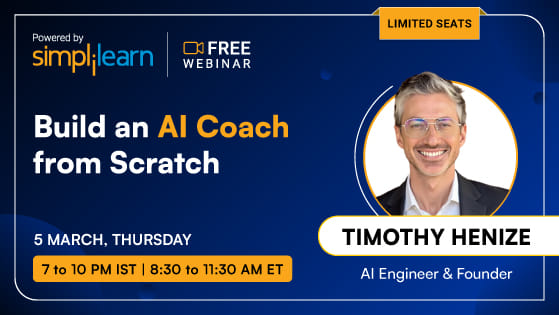
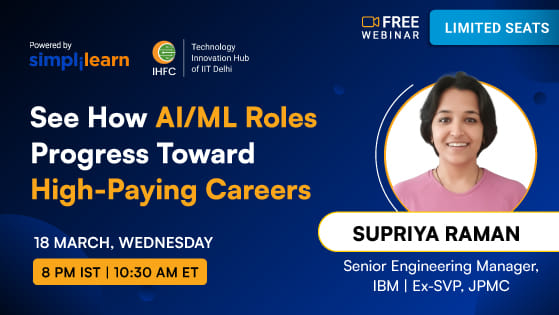
Upcoming Webinars - Free Masterclasses
Articles and Ebooks That You Can Access For Free

Tester or Developer - What Suits You the Most?
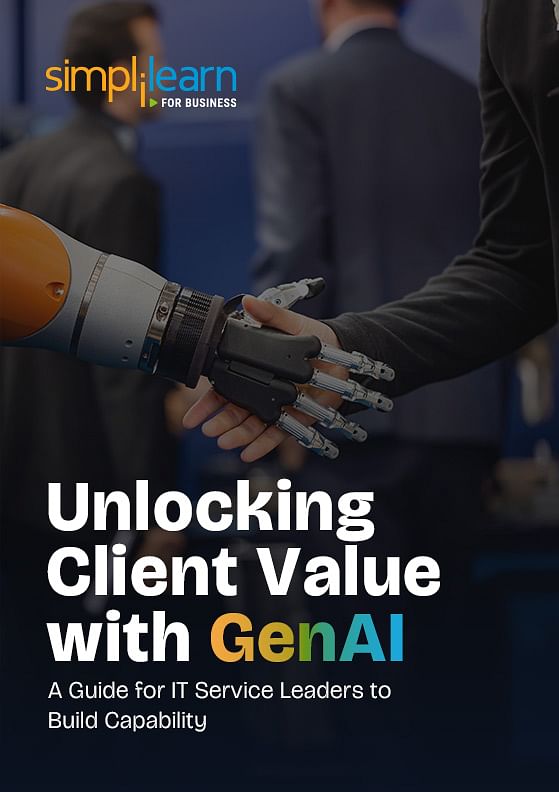
Unlocking Client Value with GenAI: A Guide for IT Service Leaders to Build Capability

Top Artificial Intelligence Careers and Skills for 2027
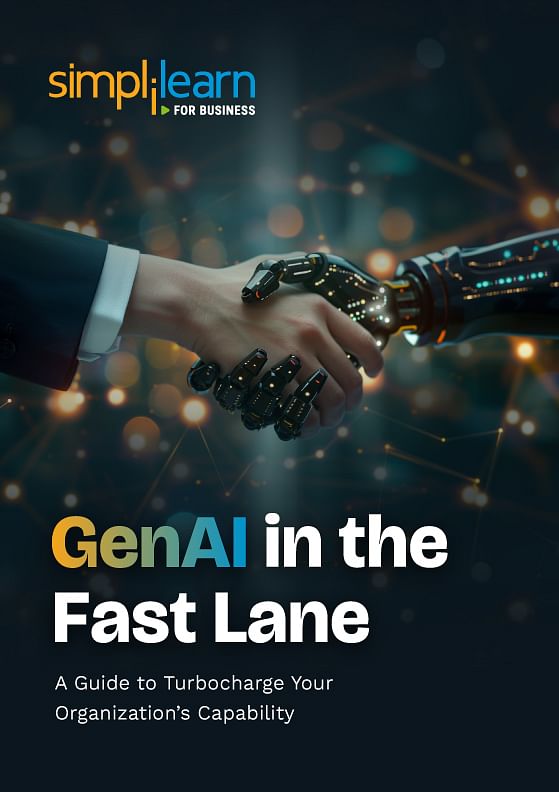
GenAI in the Fast Lane - A Guide to Turbocharge Your Organization’s Capability










Tester or Developer - What Suits You the Most?
Unlocking Client Value with GenAI: A Guide for IT Service Leaders to Build Capability
Top Artificial Intelligence Careers and Skills for 2027
GenAI in the Fast Lane - A Guide to Turbocharge Your Organization’s Capability
Learners Also Explore






Connect with our learning consultant to get all your questions answered about programs, faculty, and more
Key Things to Know
You don’t need to know at an advanced level. You will need linear algebra basics (vectors, matrices), probability fundamentals (distributions, Bayes' rule), and basic calculus (gradients, the chain rule for backpropagation).