Software Engineer Roadmap
Step-by-Step Career Roadmap Guide to Get Job-Ready
Software engineers are creative problem solvers. From building apps and platforms to optimizing systems at scale, this career path offers strong demand, diverse roles, and room to grow across industries, technologies, and specializations.
Software engineers are creative problem solvers. From building apps and platforms to optimizing systems at scale, this c...
151,000+
$115,000

Top Industries
Hiring Software Engineers
87%
Job Satisfaction
What Does a Software Engineer Do and Why Businesses Need Them?
Software engineers design, build, test, and maintain software systems that support products, platforms, and business operations. They help companies create scalable solutions, improve efficiency, drive innovation, and compete in today's technology-driven market.
Software engineers design, build, test, and maintain software systems that support products, platforms, and business operations. They help companies create scalable solutions, improve efficiency, drive innovation, and compete in today's technology-driven market.

System Design
Build solutions that balance performance and scalability
Code Development
Write clean, efficient, and well-documented code
Testing and Quality
Build and maintain automated tests to catch defects early
Deployment and Operations
Deploy features, monitor production, and resolve incidents
Who Is This Career For?
The software engineer career path is best suited for:

Logical and Problem-Solving
Able to break down complex challenges into smaller, solvable pieces & building reliable solutions
Technical and Curious
Comfortable learning new languages, tools, frameworks, & understand how systems work
Collaborative and Communication-Ready
Work with product, design, QA, and engineering teams to ship software that addresses real user needs




Software Engineer Salary Gallery
Compensation* grows significantly as you progress through the software engineering career path.
$63,000 - $100,000
+9% Annually
Entry-Level / Junior
$102,000 - $159,000
+11% Annually
Mid-Level / Software Engineer
$100,000 - $200,000
+16% Annually
Senior / Staff Engineer
Entry-Level / Junior
$63,000 - $100,000
Mid-Level / Software Engineer
$102,000 - $159,000
Senior / Staff Engineer
$100,000 - $200,000
*All salary figures referenced are based on data reported by employees on Glassdoor.
Step-by-Step Software Engineer Career Roadmap
A comprehensive guide to skills, responsibilities, and expectations at each career level
Who This Is For
New graduates entering software development
Self-taught developers or bootcamp graduates
Professionals transitioning from adjacent roles
New graduates entering software development
Self-taught developers or bootcamp graduates
Professionals transitioning from adjacent roles
Role Outcomes
Write and ship clean code
Fix bugs and resolve issues
Participate in code reviews
Learn team workflows and delivery practices
Tool Stack


Technical Skills
Python, JavaScript, Java, or Go
Data Structures and Algorithms
Version Control (Git)
Basic SQL
REST APIs
Python, JavaScript, Java, or Go
Data Structures and Algorithms
Version Control (Git)
Basic SQL
REST APIs
+ 3 more skills
Soft Skills
Problem Solving
Team Collaboration
Time Management
Clear Communication
Logical Reasoning
Problem Solving
Team Collaboration
Time Management
Clear Communication
Logical Reasoning
Example Deliverables

Bug Fix Pull Request
Identify the root cause, patch the issue, and document the fix for review.
Feature Implementation (Scoped)
Build a clearly defined feature within agreed acceptance criteria.
Unit Test Suite
Write tests that validate core logic, edge cases, and expected behavior.
KPIs
Code Review Turnaround
Bug Fix Resolution Time
Test Coverage on Owned Code
Sprint Velocity Contribution
On-time Delivery of Assigned Tasks
Interview Checkpoint
Walk me through how you would debug an issue where a feature works locally but fails in production.
How would you design a simple REST API for a to-do list application?
How would you optimize a slow-performing application or API endpoint and identify the bottleneck?
New graduates entering software development
Self-taught developers or bootcamp graduates
Professionals transitioning from adjacent roles
New graduates entering software development
Self-taught developers or bootcamp graduates
Professionals transitioning from adjacent roles
Write and ship clean code
Fix bugs and resolve issues
Participate in code reviews
Learn team workflows and delivery practices
Python, JavaScript, Java, or Go
Data Structures and Algorithms
Version Control (Git)
Basic SQL
REST APIs
Python, JavaScript, Java, or Go
Data Structures and Algorithms
Version Control (Git)
Basic SQL
REST APIs
+ 3 more skills
Problem Solving
Team Collaboration
Time Management
Clear Communication
Logical Reasoning
Problem Solving
Team Collaboration
Time Management
Clear Communication
Logical Reasoning
Bug Fix Pull Request
Identify the root cause, patch the issue, and document the fix for review.
Feature Implementation (Scoped)
Build a clearly defined feature within agreed acceptance criteria.
Unit Test Suite
Write tests that validate core logic, edge cases, and expected behavior.
Code Review Turnaround
Bug Fix Resolution Time
Test Coverage on Owned Code
Sprint Velocity Contribution
On-time Delivery of Assigned Tasks
Walk me through how you would debug an issue where a feature works locally but fails in production.
How would you design a simple REST API for a to-do list application?
How would you optimize a slow-performing application or API endpoint and identify the bottleneck?









Key Things to Know
In your first software engineering role, you need to spend time understanding codebases, writing smaller features, fixing bugs, and learning how the team ships code. Ramp-up is normal and expected.
A CS degree is definitely helpful, but it is not the only path into the field. Many software engineers start their careers through certifications, self-study, or roles in allied technical fields.
Start by owning technical design documents for your features. Learn to evaluate tradeoffs in architecture, scalability, and maintainability before writing code.
Clear communication, strong documentation practices, the ability to scope and estimate work accurately, and knowing when to escalate decisions.
The focus shifts from writing code to shaping systems, setting technical direction, and enabling other engineers to do their best work.
Success is typically tied to system reliability, engineering velocity, the quality of architectural decisions, and how effectively you enable teams to ship.
How to Get Started
Software Engineer Roadmap: From Complete Beginner to Job-Ready Software Engineer
1. Programming Foundations
Learn
One primary language: Python, JavaScript, Java, or Go
Core concepts: variables, loops, functions, conditionals, data types
Problem-solving fundamentals: break down tasks, pseudocode, simple algorithms
Practice & Deliver
1 command-line application (calculator, to-do list, or quiz game)
1 set of coding exercises (arrays, strings, basic sorting)
1 small project pushed to GitHub with a README
Pick A Learning Path
Track A
- Python fundamentals
- Data types and control flow
- Functions and basic OOP
Track B
- JavaScript fundamentals
- DOM manipulation basics
- Node.js basics
Track C
- Program orientation
- Intro to programming
- Language foundations module
2. Core Engineering Skills
Learn
Version control with Git (branching, merging, pull requests)
Data structures: arrays, linked lists, hash maps, stacks, queues, trees
Basic algorithms: sorting, searching, recursion
Practice & Deliver
1 collaborative project using Git branches and pull requests
1 set of data structure and algorithm challenges (50+)
1 REST API project (CRUD operations)
Pick A Learning Path
Track A
- Git and GitHub workflow
- REST API fundamentals
- Database basics (SQL)
Track B
- Data structures deep dive
- Algorithm practice (LeetCode-style)
- System design introduction
Track C
- Guided engineering labs
- Full-stack mini-project
- Code review practice
3. Building and Shipping
Learn
Testing: unit, integration, and basic end-to-end testing
CI/CD basics: automated builds, tests, deployments
Cloud fundamentals: deploying an application to AWS, GCP, or Azure
Practice & Deliver
1 application with automated tests and a CI/CD pipeline
1 cloud-deployed project (API or web application)
1 technical blog post or documentation write-up
Pick A Learning Path
Track A
- Testing fundamentals
- CI/CD pipeline setup
- Monitoring and logging basics
Track B
- Docker and containers
- Cloud deployment basics
- Infrastructure as code intro
Track C
- Guided capstone project
- Mentor review
- Portfolio polishing
4. Projects and Portfolio
Learn
Structure project write-ups around the problem, approach, tradeoffs, and outcome
Present code and design decisions clearly
Explain the reasoning behind technical choices
Highlight measurable results (performance improvements, user impact, system reliability)
Practice & Deliver
Full-stack application with authentication and database
Open-source contribution or personal tool
System design case study (e.g., designing a chat service or payment system)
API integration project
Performance optimization case study
Pick A Learning Path
Track A
- Full-stack project build
- Open-source contribution guide
- Technical writing practice
Track B
- System design case studies
- API and microservices project
- Performance tuning challenge
Track C
- Capstone project
- Portfolio review and polishing
- Interview prep integration
5. Choose Your Specialization
Learn
Engineering domains: Backend, frontend, full-stack, mobile, DevOps/SRE, data engineering, and embedded systems
Emerging areas: AI/ML engineering, platform engineering, cloud-native development, and security engineering
Domain-specific patterns: Architecture patterns, toolchains, scaling strategies, and industry-specific requirements across domains
Practice & Deliver
1 specialization-aligned project
1 technical deep-dive write-up
1 interview story bank with domain-specific examples
Pick A Learning Path
Pro Tip
Domain specialization often improves hiring relevance because employers value domain expertise alongside core engineering fundamentals.
1. Programming Foundations
Build the core knowledge and skills needed for a successful software engineering career.
Learn
One primary language: Python, JavaScript, Java, or Go
Core concepts: variables, loops, functions, conditionals, data types
Problem-solving fundamentals: break down tasks, pseudocode, simple algorithms
Practice & Deliver
1 command-line application (calculator, to-do list, or quiz game)
1 set of coding exercises (arrays, strings, basic sorting)
1 small project pushed to GitHub with a README
Pick A Learning Path
Track A
- Python fundamentals
- Data types and control flow
- Functions and basic OOP
Track B
- JavaScript fundamentals
- DOM manipulation basics
- Node.js basics
Track C
- Program orientation
- Intro to programming
- Language foundations module
2. Core Engineering Skills
Build the practical skills needed to contribute to real codebases and collaborate effectively.
Learn
Version control with Git (branching, merging, pull requests)
Data structures: arrays, linked lists, hash maps, stacks, queues, trees
Basic algorithms: sorting, searching, recursion
Practice & Deliver
1 collaborative project using Git branches and pull requests
1 set of data structure and algorithm challenges (50+)
1 REST API project (CRUD operations)
Pick A Learning Path
Track A
- Git and GitHub workflow
- REST API fundamentals
- Database basics (SQL)
Track B
- Data structures deep dive
- Algorithm practice (LeetCode-style)
- System design introduction
Track C
- Guided engineering labs
- Full-stack mini-project
- Code review practice
3. Building and Shipping
Build the execution skills needed to take features from code to production.
Learn
Testing: unit, integration, and basic end-to-end testing
CI/CD basics: automated builds, tests, deployments
Cloud fundamentals: deploying an application to AWS, GCP, or Azure
Practice & Deliver
1 application with automated tests and a CI/CD pipeline
1 cloud-deployed project (API or web application)
1 technical blog post or documentation write-up
Pick A Learning Path
Track A
- Testing fundamentals
- CI/CD pipeline setup
- Monitoring and logging basics
Track B
- Docker and containers
- Cloud deployment basics
- Infrastructure as code intro
Track C
- Guided capstone project
- Mentor review
- Portfolio polishing
4. Projects and Portfolio
Build proof of engineering judgment by showing how you solved real problems, made tradeoffs, and shipped working software.
Learn
Structure project write-ups around the problem, approach, tradeoffs, and outcome
Present code and design decisions clearly
Explain the reasoning behind technical choices
Highlight measurable results (performance improvements, user impact, system reliability)
Practice & Deliver
Full-stack application with authentication and database
Open-source contribution or personal tool
System design case study (e.g., designing a chat service or payment system)
API integration project
Performance optimization case study
Pick A Learning Path
Track A
- Full-stack project build
- Open-source contribution guide
- Technical writing practice
Track B
- System design case studies
- API and microservices project
- Performance tuning challenge
Track C
- Capstone project
- Portfolio review and polishing
- Interview prep integration
5. Choose Your Specialization
Work on domain fluency so your engineering skills directly match the job you want.
Learn
Engineering domains: Backend, frontend, full-stack, mobile, DevOps/SRE, data engineering, and embedded systems
Emerging areas: AI/ML engineering, platform engineering, cloud-native development, and security engineering
Domain-specific patterns: Architecture patterns, toolchains, scaling strategies, and industry-specific requirements across domains
Practice & Deliver
1 specialization-aligned project
1 technical deep-dive write-up
1 interview story bank with domain-specific examples
Pick A Learning Path
Pro Tip
Domain specialization often improves hiring relevance because employers value domain expertise alongside core engineering fundamentals.
Key Things to Know
A software engineer builds reliable products, improves system performance, solves user problems, and supports business growth through technology.
Software engineers should understand system design, testing, debugging, documentation, collaboration, security, and real user needs.
Strong projects include full-stack apps, APIs, automation tools, scalable systems, performance fixes, and open-source contributions.
Free Software Engineer Upskilling Resources
Free Courses

C Programming Basics

Fundamentals of Software Development

Introduction to Software Testing

Software Design using Generative AI

Software Building using Generative AI

Software Testing and Documentation using Gen AI

Software Testing with Generative AI

Ethical Generative AI in Software Engineering


Generative AI Software Development

Introduction to Software Architecture
C Programming Basics
Fundamentals of Software Development
Introduction to Software Testing
View More
Upcoming Webinars - Free Masterclasses
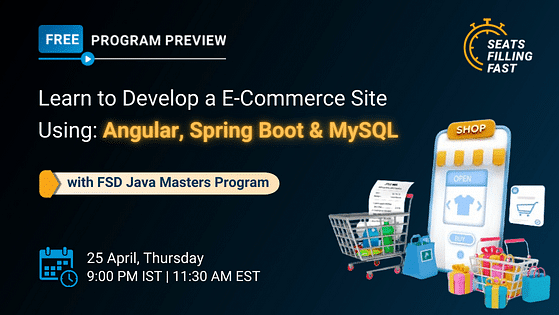
Learn to Develop a Full-Stack E-Commerce Site: Angular, Spring Boot & MySQL

Top 10 Automation Tools to Secure Your Career Growth in 2025

Code, Test, Deploy: How Software Developers Use GenAI Today
Articles and Ebooks That You Can Access For Free
The Scope Of Software Testing
Python Interview Guide

Why Engineers and Software Developers Should Get Certified in Selenium

Top AI Jobs & How to Land Them in 2026





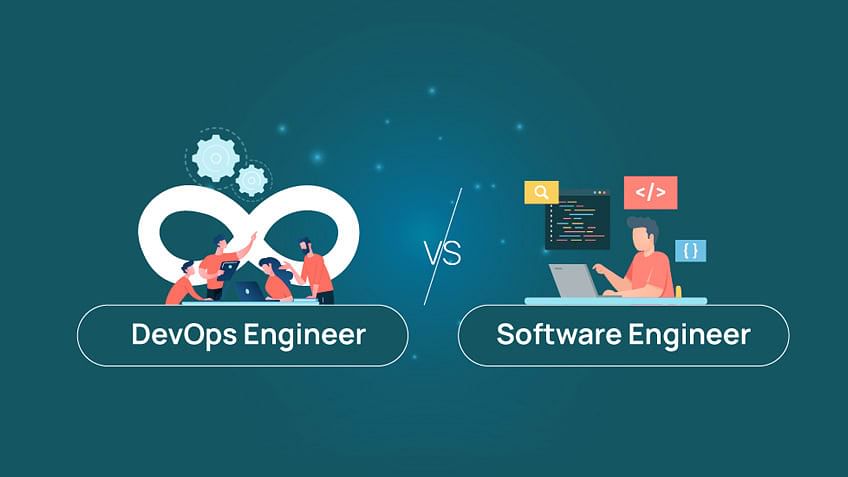







The Scope Of Software Testing
Python Interview Guide
Why Engineers and Software Developers Should Get Certified in Selenium
Top AI Jobs & How to Land Them in 2026
Learners Also Explore






Connect with our learning consultant to get all your questions answered about programs, faculty, and more
Key Things to Know
Not necessarily. While a CS degree provides a strong foundation, many successful engineers come from bootcamps, self-study, or related fields. What matters most is demonstrable skill, a solid portfolio, and the ability to pass technical interviews.