bg-image

Image Processing

Image processing sits at the core of modern systems that capture, interpret, and act on visual data. Simplilearn's free image processing courses cover classical techniques with

...
Empowering Millions Through Professional Learning

Browse Image Processing Courses

Filters
Category
(43)
(18)
(15)
(13)
(8)
(7)
(7)
(5)
(3)
(1)
(1)
(1)
Duration

Free Image Processing Courses Overview

Image processing is the application of algorithms to digital images to extract information, enhance quality, or prepare visual data for further analysis. It is the foundational layer beneath computer vision and AI visual systems. Every recognition, detection, or generation task begins with processed image data.

At the technical level, image processing involves:

  • Reading and manipulating pixel values to extract meaningful information

  • Applying filters and transformations to enhance or modify visual content

  • Detecting edges, contours, shapes, and objects within an image

  • Converting between color spaces for different analytical purposes

  • Segmenting images into regions for focused analysis

  • Preparing visual data for downstream machine learning and deep learning models

Modern AI visual systems rely on clean, processed image inputs to function accurately. Understanding how images are processed at this foundational level helps separate engineers who use computer vision tools from those who build them.

Why is Image Processing Expertise Critical for Careers in AI, Medical Imaging, Robotics, and Autonomous Systems?

The global computer vision market is projected to grow from $19.78 billion in 2024 to $112.10 billion by 2035. Image processing sits at the core of that growth.

  • Medical imaging teams detect tumors and segment organs faster and more accurately than manual review

  • Robotics engineers use real-time image processing for navigation and object handling

  • Autonomous vehicles process LiDAR and camera data for split-second decisions

  • Quality control teams deploy visual inspection algorithms to catch defects at scale

What Techniques Will You Learn?

The OpenCV courses provide comprehensive, hands-on coverage of classical image processing techniques, from pixel-level operations through real project implementations.

  • Image Filtering

    • Learn how to apply filters, image thresholding, and edge detection to isolate visual features.

    • Project Applied: Face detection and blurring

  • Image Transformation

    • Learn color space conversion, resizing, color modification, blending, and perspective warping.

    • Project Applied: Image warp perspective project

  • Segmentation

    • Learn contour detection, shape detection, color detection, and image thresholding for region-based analysis.

    • Project Applied: Object detection and tracking

  • Feature Extraction

    • Learn how to access and modify pixel values, image properties, region-of-interest selection, image splitting, and merging.

    • Project Applied: Deep image classification

  • Image Enhancement

    • Learn basic operations, drawing functions such as lines, circles, rectangles, and text, along with face blurring techniques.

    • Project Applied: Optical flow and motion detection

  • Real-Time Processing

    • Learn object tracking and optical flow analysis on video streams, not just static images.

    • Project Applied: Object tracking and optical flow

Which Image Processing Libraries are Covered In These Courses?

The free image processing category spans classical computer vision through AI-powered image generation tools.

  • OpenCV

    • Learn filtering, transformation, segmentation, feature extraction, and six hands-on image processing projects.

    • Covered in: Introduction to OpenCV for Beginners, Python OpenCV Basics

  • Python

    • Use Python throughout the OpenCV courses for all image processing tasks.

    • Covered in: Introduction to OpenCV for Beginners, Python OpenCV Basics

  • Adobe Firefly

    • Learn AI-powered image creation and editing using generative AI within Adobe’s creative ecosystem.

    • Covered in: Free Adobe Firefly AI Course

  • Microsoft Designer

    • Learn AI-assisted visual design and image generation for creative and marketing applications.

    • Covered in: Free Microsoft Designer Course

  • Text-to-Image AI Tools

    • Learn how to generate images from text prompts using AI generators, including DALL-E, Midjourney-style tools, and Stable Diffusion concepts.

    • Covered in: Free Text to Image AI Generators Course

  • Image Captioning Models

    • Learn how models generate descriptive text from visual content.

    • Covered in: Free Image Captioning Models Course

For deep learning-specific computer vision frameworks, learners can supplement these free image processing courses with Simplilearn's paid programs in AI and machine learning that provide comprehensive coverage of other related tools.

How is Image Processing applied in Medical Diagnostics, Satellite Imagery, Facial Recognition, and Quality Inspection?

Image processing skills transfer across sectors wherever visual data drives decisions.

  • Medical Diagnostics

    • Segment tumor boundaries in MRI and CT scans.

    • Detect anomalies in X-rays.

    • Prepare radiology images for AI-assisted diagnosis.

  • Satellite and Aerial Imagery

    • Classify land cover.

    • Detect infrastructure changes.

    • Monitor deforestation.

    • Analyze crop health using remote sensing data.

  • Facial Recognition

    • Detect faces in video streams.

    • Extract facial features.

    • Match identities across surveillance and authentication systems.

  • Quality Inspection

    • Identify surface defects.

    • Detect dimensional errors.

    • Find contamination in manufactured products using automated visual inspection pipelines.

  • Autonomous Vehicles

    • Segment road lanes.

    • Detect pedestrians and traffic signs.

    • Track objects across consecutive video frames in real time.

  • Creative Content AI

    • Generate original images from text prompts.

    • Caption visual content for accessibility.

    • Edit images using AI-powered creative tools.

What is the Difference Between Classical Image Processing, Computer Vision, and Deep Learning-based Image Analysis?

These disciplines build on each other sequentially, and understanding the distinction helps you choose the right learning path.

  • Classical Image Processing

    • Uses algorithms to manipulate pixel data for enhancing, transforming, or extracting features from images.

    • Works through rule-based, explicit algorithms written by developers.

    • Key techniques include filtering, thresholding, edge detection, morphological operations, and color space conversion.

    • Common libraries include OpenCV, PIL, and scikit-image.

    • OpenCV courses cover classical techniques and six applied projects.

    • Best for building foundational understanding and implementing lightweight visual tasks.

  • Computer Vision

    • Focuses on enabling machines to interpret and understand visual information.

    • Combines image processing with machine learning and geometric modeling.

    • Key techniques include object detection, image classification, stereo vision, and optical flow.

    • Common libraries include OpenCV, scikit-image, and Dlib.

    • OpenCV courses introduce object detection and tracking.

    • Best for roles in robotics, surveillance, medical imaging, and industrial vision.

  • Deep Learning-Based Image Analysis

    • Uses neural networks trained on large image datasets to learn visual patterns automatically.

    • Works through data-driven models that learn from examples rather than programmed rules.

    • Key techniques include CNNs, ResNet, YOLO, GANs, diffusion models, and vision transformers.

    • Common libraries include TensorFlow, PyTorch, Keras, and Hugging Face.

    • Text-to-image and image captioning courses cover applied deep learning concepts.

    • Best for AI research, image generation, large-scale recognition, and generative AI.

Know More About Free Image Processing Courses

Overall employment in computer and information technology occupations is projected to grow much faster than average from 2024 to 2034. Approximately 317,700 openings are projected each year, with a median annual wage of $105,990 (

...

Upcoming Webinars - Free Masterclasses
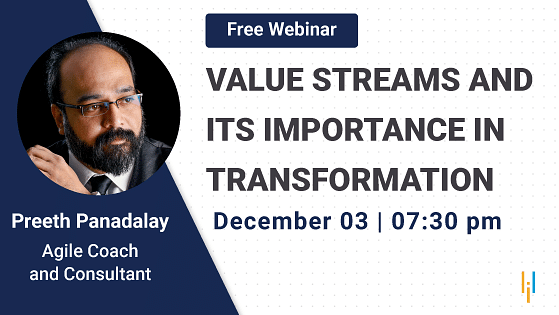
Value Streams and Its Importance in Transformation
On Demand Webinar

Value Streams and Its Importance in Transformation

Thu, Dec 03, 2020, 7:30 PM (IST)
Know More
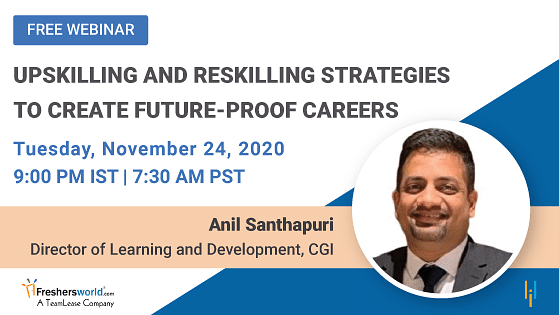
Upskilling and Reskilling Strategies to Create Future-Proof Careers

On Demand Webinar

Upskilling and Reskilling Strategies to Create Future-Proof Careers

Sat, Sep 24, 2022, 9:00 PM (IST)
Know More

Articles and Ebooks That You Can Access For Free

Frequently Asked Questions

The Python OpenCV Basics and Introduction to OpenCV courses are beginner-level and assume basic Python familiarity with variables, loops, functions, and importing libraries. No advanced mathematics is required to get started. A working knowledge of arrays and basic linear algebra helps when working with pixel matrices and transformation operations, but these concepts are introduced within the courses themselves. Learners with no image processing background but solid Python fundamentals can start the OpenCV courses directly.


*All salary figures referenced are based on data reported by employees on Glassdoor. These figures are estimates and may vary depending on location, experience level, company policies, and market conditions. Actual compensation may differ.

© 2009-2026 - Simplilearn Solutions.