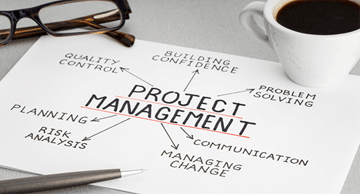
Project management is the process of planning, organizing, executing, and completing work within a fixed timeline and budget. Businesses use project management to control resources, manage risks, and deliver goals on time. On the contrary, the cost of poor project execution can be significant. According to recent research from the Project Management Institute (PMI), only 48% of projects are considered successful, while 12% fail outright. PMI also found that projects with clear goals, performance tracking, and strong management practices are nearly twice as likely to succeed.
Modern projects involve changing deadlines, distributed teams, technical workflows, and constant communication. Project managers now need both traditional planning knowledge and Agile delivery skills.
Simplilearn’s free project management courses help beginners learn project management from scratch for free in 2026 while also supporting working professionals building structured PM skills. The learning path includes:
Learning Area: PM fundamentals
What You Learn: Project lifecycle, scope, planning, execution, and closure
Learning Area: Agile delivery
What You Learn: Sprint planning, backlog management, Scrum, and Jira workflows
Learning Area: PMP preparation
What You Learn: Risk, cost, quality, stakeholder, and communication management
Learning Area: PRINCE2 concepts
What You Learn: Principles, themes, governance, and structured delivery
Learning Area: AI-assisted PM
What You Learn: ChatGPT workflows, AI scheduling, automation, and reporting
Simplilearn courses cover multiple project delivery approaches and project management responsibilities through practical beginner-level training. The table below shows the major concepts covered across the free project management courses.
Course: Project Management 101
Key Topics Covered: Project basics, scope management, project vs program
Course: Free Project Manager Course
Key Topics Covered: PM process groups, Agile overview, Jira, Trello
Course: PMP Basics
Key Topics Covered: Planning, budgeting, risk, quality, stakeholders, and earned value management
Course: Introduction to PRINCE2®
Key Topics Covered: PRINCE2 principles, business case, quality, and risk
Course: Agile for Complex Projects
Sprint planning, epics, user stories, Jira dashboards
Course: ChatGPT for Project Management
Key Topics Covered: AI reporting, scheduling, and communication automation
Course: Project Planning Using Generative AI
Key Topics Covered: Full project lifecycle with AI-assisted workflows
Course: Planning a Machine Learning Project
Key Topics Covered: ML project planning, scoping, and risk management
Course: Introduction to Jira
Key Topics Covered: Jira installation, workflows, dashboards, and features
Project managers use multiple tools for scheduling, tracking, communication, and Agile delivery. Simplilearn’s free project management tools course online cover:
Tool : Jira
Coverage in Courses: Agile workflows, dashboards, sprint tracking, and backlog management
Tool : Trello
Coverage in Courses: :Task tracking and visual project management basics
Tool : Asana
Coverage in Courses: AI-assisted task management references
Tool : Monday.com
Coverage in Courses: Workflow automation and collaboration references
Tool : MS Project
Coverage in Courses: Scheduling and project coordination references
Project management principles apply across technical, operational, and business environments. The approach changes depending on the industry and project complexity. Here are some common applications:
Industry / Use Case: IT & Software Delivery
How Project Management Is Applied:
Uses Agile frameworks and sprint planning
Manages collaboration through tools like Jira
Supports structured software development workflows
Industry / Use Case: Construction
How Project Management Is Applied:
Focuses on planning and scheduling
Manages budgeting and resource allocation
Maintains quality control throughout projects
Industry / Use Case: Product Launches
How Project Management Is Applied:
Coordinates marketing, operations, and technical teams
Tracks timelines and launch activities
Ensures cross-functional collaboration
Industry / Use Case: Marketing Campaigns
How Project Management Is Applied:
Handles approvals and campaign timelines
Supports stakeholder communication
Tracks reporting and campaign performance
Industry / Use Case: Business Transformation
How Project Management Is Applied:
Relies on governance and risk management
Uses phased execution strategies
Supports organizational change planning
Industry / Use Case: IT Project Management Courses
How Project Management Is Applied:
Emphasize Agile and Scrum methodologies
Introduce modern collaboration workflows
Focus on practical project coord
The free project management courses for IT professionals focus strongly on Agile delivery and modern collaboration workflows.
Project teams use different delivery frameworks depending on project requirements, timelines, and flexibility needs. Simplilearn’s free agile project management course online content explains how Agile frameworks support faster collaboration and continuous delivery. The differences are explained below.
Framework: Waterfall
How It Works: Projects move step-by-step through fixed phases
Best Used For: Construction, manufacturing, and regulated environments
Framework: Agile
How It Works: Teams work in short sprints with continuous feedback
Best Used For: Software, digital products, fast-changing projects
Framework: Hybrid
How It Works: Combines structured planning with Agile execution
Best Used For: Enterprise technology and transformation programs



 Strategic Planning