
Job Oriented Courses
Top 2 Job Oriented Courses for 2026
Ranked by learner rating across our 10 Job Oriented programs


Empowering Millions Through Professional Learning
- switchup4.6
- Trustpilot4.6Excellent
- Course Report4.5
Job Oriented Skills You Will Build
The core capabilities you’ll practice across Job Oriented programs
- Core Java 8 concepts
- Hibernate and Spring frameworks
- J2EE HTTP protocol and HTML
- Java EE
- Java Servlet
- Multithreading string handling exception handling techniques
- SOA and web services
Universities and Technology Partners Behind These Programs



Java Certification Training
- 4.6 out of 5
- 16.4K+ learners
- 6 Months
- Intermediate to advanced
View more about Java Certification Training
Java Certification Training is an online certification course, rated 4.6 out of 5 by 16.4K+ learners. Runs 6 Months. Best for experienced practitioners.
Applied Generative AI and Agentic AI Specialization
- 4.9 out of 5
- 5.1K+ learners
- 12 weeks
Cohort starts: 22nd Oct ’267 days left
- Intermediate to advanced
- Live cohort
View more about Applied Generative AI and Agentic AI Specialization
Applied Generative AI and Agentic AI Specialization is a live cohort certificate program offered with Virginia Tech, rated 4.9 out of 5 by 5.1K+ learners. Runs 12 weeks. Best for experienced practitioners.
- Beginner
- Self-paced
View more about Introduction to C#
Introduction to C# is a self-paced free course, rated 4.5 out of 5 by 7K+ learners. Runs 8 hrs. Best for beginners.
- Beginner
- Self-paced
View more about Introduction to AWS Batch
Introduction to AWS Batch is a self-paced free course, rated 4.5 out of 5 by 400+ learners. Runs 1 hrs. Best for beginners.

- Beginner
- Self-paced
View more about Java Programming for Beginners
Java Programming for Beginners is a self-paced free course, rated 4.5 out of 5 by 68K+ learners. Runs 4 hrs. Best for beginners.
Know more about Job Oriented Courses
What are the Best Job-oriented Courses?
Many professionals take Job-oriented courses to advance their careers in competitive industries. Here are some of the best industry-oriented courses, as mentioned below, along with the course description:
1. Automation Test Engineer Master's Program
The program covers three tools: Selenium, Appium, and JUnit. This course shows the participants how to develop, run, and maintain automated test scripts to enhance solution quality and reduce costs.
-
Pre-requisites: Basic understanding of software testing & programming.
-
Job opportunities: Automation Test Engineer, QA Engineer, Test Architect, Software Development Engineer in Test (SDET)
2. AWS Solution Architect Certification Training
This course builds knowledge for professionals looking to design scalable, secure, and cost-effective cloud-based solutions. It also describes best practices for deploying applications in AWS.
-
Prerequisites: Basic knowledge of networking and cloud computing is recommended.
-
Job Opportunities: AWS Solutions Architect, Cloud Engineer, DevOps Engineer, Cloud Consultant.
3. Certified ScrumMaster (CSM) Certification Training
This certification trains you in agile processes and Scrum methodologies for better team cooperation and project management performance. The certificate prepares professionals to mentor teams within Agile organizations.
-
Prerequisites: Basic knowledge of project management preferred; no formal prerequisites.
-
Job Roles: Scrum Master, Agile Coach, Project Manager, Product Owner.
4. CISSP Certification - Certified Information Systems Security Professional Training
This course provides in-depth knowledge of cybersecurity principles, including risk management, security architecture, and access control. It prepares professionals for advanced security roles by covering industry best practices.
-
Prerequisites: At least five years of work experience in IT security.
-
Job Opportunities: Cybersecurity Analyst, Security Consultant, Chief Information Security Officer (CISO), Network Security Engineer.
5. Cloud Architect Master's Program
This course encompasses the entire cloud architecture, DevOps methodologies, and cloud security. Participants also get hands-on experience with AWS, Microsoft Soak, and Google Cloud.
-
Prerequisites: Basic concept of IT; Networking, Cloud experience will be helpful.
-
Job Roles: Cloud Architect, Cloud Engineer, Solutions Architect, DevOps Engineer.
6. Full Stack Java Developer Master's Program
A Comprehensive course on Java Technologies, including Front-end and Back-end development. This incorporates participants to learn Spring Boot, Hibernate, microservices, and advanced Java frameworks for building sturdy web applications.
-
Prerequisites: Beginner-level knowledge of coding is suggested.
-
Job Opportunities: Full-Stack Developer, Java Developer, Software Engineer, Web Developer.
7. Leading SAFe® 6.0 Training with SAFe Agile Certification
The training program explains the Scaled Agile Framework (SAFe) and provides Lean-Agile principles that support enterprise agility. It helps them adapt Agile practices on a broader organizational scale.
-
Requirements: Agile development or Scrum experience is helpful.
-
Opportunity: SAFe Agilist, Agile Program Manager, Enterprise Agile Coach.
8. PMP® Certification Training
This PMI-based certification course covers methodologies, tools, and project management best practices. It enables experts to handle projects effectively by achieving timely delivery.
-
Prerequisites: A bachelor’s degree and three or more years of project management experience.
-
Related Jobs: Project Manager, Program Manager, Business Analyst, Operations Manager.
9. Post Graduate Program in Cloud Computing
This is a complete course to become a cloud engineer. It includes training in cloud computing technologies, AWS, Azure, Google Cloud, DevOps, and security. It helps professionals develop expertise in designing and managing cloud solutions.
-
Prerequisites: Basic IT or cloud computing knowledge.
-
Job Opportunities: Cloud Solutions Architect, Cloud Security Engineer, DevOps Engineer, Cloud Consultant.
10. PRINCE2® Foundation and Practitioner 7th Edition Certification Training
The training will allow you to understand of the widely used methodologies for managing projects in the industry, PRINCE2. A structured approach to project management plays a huge role, and you learn best during the program.
-
There are no prerequisites for the Foundation level; however, to take the Practitioner level, you must be PRINCE2 Foundation certified.
-
Careers: Project Manager, Program Manager, Project Analyst, Risk Manager.
11. Professional Certificate Course in Data Science
PRINCE2 certification is a widely known methodology for managing projects in many industries. They are trained to use structured project management methods to enhance effectiveness and success.
-
Requirements: No prerequisites for Foundation; PRINCE2 Foundation certification is a prerequisite for the Practitioner level.
-
Positions Available: Project Manager, Program Manager, Project Analyst, Risk Manager.
12. Professional Certificate in Data Science and Generative AI
This certification course covers artificial intelligence, deep learning, and generative AI models. Attendees get hands-on experience developing AI-based web apps and tackling challenging data problems.
-
Prerequisites: A Background in Python and data science fundamentals is helpful.
-
Job Opportunities: AI Engineer, Data Scientist, NLP Engineer, Machine Learning Researcher.
What Are the Key Learning Objectives of a Job-Oriented Certification?
The primary learning objectives include:
-
Gaining expertise in a specific domain through structured training.
-
Understanding real-world applications of theoretical knowledge.
-
Developing hands-on experience with industry-relevant tools and frameworks.
-
Earning a globally recognized certification validates professional skills.
How Can a Job-Oriented Certification Benefit My Career?
Employers have increasingly sought after certified professionals because they have both proficiency and dedication to lifelong learning. Here are some key benefits:
-
Enhances Job Market Competitiveness – A certification differentiates you from other candidates with similar experience.
-
Earning potential – Certified professionals earn more than their non-certified counterparts.
-
Makes You More Competitive – Opens up opportunities towards management and senior positions.
-
Profession Validation – Confirm practical skills and knowledge in a particular field.
-
Enhances Employment Opportunities – Employers prefer or sometimes require certifications to fill specific positions.
-
Getting Industry Recognition – Certifications from renowned institutions give credibility to your resume.
-
Enhances Work Productivity – Trains people to fulfill operations efficiently.
What Job Roles Can I Pursue After Completing a Job-Oriented Certification?
The job roles available depend on the course chosen. Some potential career paths include:
-
Cloud Computing: Cloud Engineer, AWS Solutions Architect, DevOps Engineer.
-
Cyber Security: Security Analyst, Ethical Hacker, Information Security Manager.
-
Data Science: Data Scientist, AI Engineer, Business Intelligence Analyst.
-
Project Management: Project Manager, Scrum Master, Agile Coach.
-
Software Development: Java Developer, Full-Stack Developer, Software Engineer.
Why Should I Choose This Job-Oriented Certification Over Others?
Such certifications are more specialized according to the current demands of the industry, and they uplift your career to a great extent. Here are some primary factors that separate this certification:
-
Certificates in Great Demand: Big firms and international standards.
-
Training to Real World Practical Scenarios: Training includes base projects and case studies
-
Practical Experience: Train with real-world experts.
-
Job Assisting: Resume writing, interview training, job placement, etc.
Connect with our learning consultant to get all your questions answered about programs, faculty, and more
Tools and Platforms Used in Our Job Oriented Courses
Get hands-on with the platforms and tools covered across our Job Oriented programs


.png)





















Recommended Learning Materials for Upskilling
Explore free webinars, tutorials, career guides, and practical reads to go deeper
Upcoming Webinars - Free Masterclasses
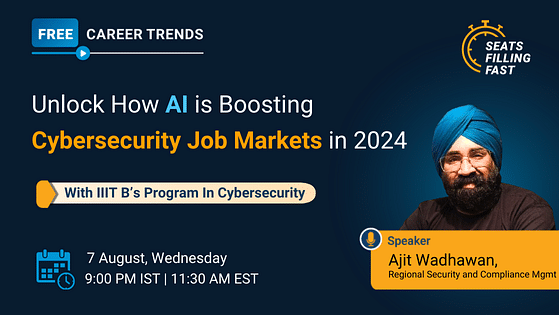
Articles and Ebooks That You Can Access For Free



What Learners Say About Our Job Oriented Courses
Read what learners say about their learning experience

Kristina Borštnik
Associate Director @AMRI,
"There was a lot of knowledge sharing throughout the course. additional information was shared apart from the slides and that aspect made the training more dynamic and engaging. Good overview. "

Mark Clulow
Webmaster / Director,
"Absolutely wonderful. Clear, concise and easy to use - the learners' user interface is sleek and tidy and the way in which the system tracks my progress is excellent!"
Bruce Minnich
Consultant @, IBM
"“Simplilearn is a fantastic training resource with a very organized and proficient way of on-boarding. In the online classroom, the interaction with the instructor was good. Simplilearn is definitely the future of training. "
Job Oriented Instructors and Mentors

Alan Robinson
Professor - Operations Management, University of Massachusetts Amherst,
Alan Robinson is a full-time professor at the Isenberg School of Management of UMass, a consultant and book author specializing in managing ideas (idea-generation and idea-driven organization) and building high-performance organizations, creativity, innovation, quality, and lean management.

Prof. Abhinava Tripathi
Assistant Professor Department of Management Studies, IIT Roorkee,
Prof. Abhinava Tripathi is a faculty in the Finance & Accounting area at the Department of Management Studies at IIT Roorkee. Prof. Abhinava’s research focuses on the areas of Financial Markets and Market Microstructure. He is a Ph.D. from IIM Lucknow and MBA from IIM Kozhikode.
Job Oriented Courses: Frequently Asked Questions
The job-oriented courses equip students with practical skills and industry-specific knowledge, which prepare them for a specific job or career path. Unlike traditional academic classes, they focus on real-world applications. The courses prepare individuals to meet industry demands quickly. Practical training becomes the primary goal of these programs.
A detailed job-oriented course helps professionals up-skill themselves per the latest industry trends and enables them to work on skills in demand. These courses offer practical experience, mentorship from industry professionals, and internationally accredited credentials that enhance employability.
Career Opportunities:
The job-oriented course upgrades skills and opens several doors in a career. Depending on the field you opt for, some of the roles are:
-
Cloud Computing Careers – Cloud Architect, AWS Solutions Architect, DevOps Engineer.
-
Data science roles – Data Analyst, AI Engineer, Business Intelligence Specialist, etc.
-
Careers in cybersecurity – Security Analyst, Ethical hacker, Cybersecurity. Consultant.
-
Software Development — Full-Stack Development, Java Programming, and Application Development.
-
Project Management – Scrum Master, Agile Coach, and IT Project Manager.
-
Business & Marketing Analytics – Business Analyst and Digital Marketing Strategist.
Growing Demand for Job-Oriented Professionals:
With the evolution of industries, there is an increasing demand for qualified individuals. The companies are investing in new technologies and looking for professionals who can embrace digital transformation. Among the main trends are:
-
Developments in Technology - As Companies increasingly adopt new technologies, demand for skilled professionals is rising.
-
High Demand in Cloud Computing – According to the forecast, the cloud computing industry will expand significantly resulting in many jobs.
-
Cybersecurity Demand on the Rise – As cyber threats grow, organizations need professionals to secure their digital assets.
-
Project Management Skills – Companies need expert professionals who can handle complex designs effectively.
-
Remote Work and Digital Transformation – Companies require IT professionals to support remote work environments and digital tools.
Practical Skills Gained from the Course:
A job-oriented course provides learners with valuable practical skills directly applicable in the workplace. These skills include:
-
Get up to speed on the leading tools and software used in industry.
-
How to apply these tools to problems in the real world.
-
Data literacy skills are needed to make sense of data and inform decisions.
-
Excellent project management and leadership skills
-
Cybersecurity and risk management expertise to protect digital assets.
The content of a job-oriented course depends on the course you wish to choose. But most courses cover theoretical foundations, technical skills, hands-on projects, and case studies. Additional training is provided to learners on the latest trends and best practices in the industry and how to remain competitive in their fields. Several courses offer live projects, where students get to work on projects before they step into the professional world.
Key Concepts and Techniques:
The main principles of job-oriented courses include practical skill acquisition along with industry applicability and professional preparedness. Here are the essential elements:
-
Skills-Based Learning: Job-oriented courses provide learners with practical skills which they can use directly in their work environment.
-
Practical Application: The program teaches students to solve real-world problems while thinking critically in their future work environment.
-
Career Advancement: The course enables professionals to either build additional skills or transition into different career paths.
-
Hands-On Training: The training includes workshops together with internships and mentorship programs. Students learn through direct industry experience as part of their experiential education.
-
Certifications & Accreditation: The majority of courses provide students with industry-endorsed certifications.
Overview of Modules and Topics:
Each job-oriented course is structured into modules that progressively build knowledge and skills. A typical course may include:
-
Introduction to Industry Fundamentals – Basic concepts, terminology, and importance in real-world applications.
-
Advanced Tools and Technologies – Hands-on training with industry-relevant software and platforms.
-
Case Studies and Real-Life Applications – Practical scenarios to apply theoretical knowledge.
-
Capstone Projects and Assessments – Final projects to demonstrate proficiency and problem-solving abilities.
Job-oriented courses are beneficial for:
-
Students who would like to learn specific skills before entering working life.
-
Those employees who want a promotion or higher pay.
-
People making a career change want to move to a new industry.
-
Entrepreneurs without the technical knowledge needed to run their business.

*All salary figures referenced are based on data reported by employees on Glassdoor. These figures are estimates and may vary depending on location, experience level, company policies, and market conditions. Actual compensation may differ.