Full Stack Developer Roadmap
Step-by-Step Career Roadmap Guide to Get Job Ready
Full-stack developers build the entire web experience, from back-end databases and APIs to front-end user interfaces. With global developer job postings up 27%, full-stack skills have become one of the most in-demand combinations in tech hiring.
Full-stack developers build the entire web experience, from back-end databases and APIs to front-end user interfaces. Wi...
4.4M+
$127,000

Top Industries
Hiring Full Stack Developers
68%
Job Satisfaction
What Does a Full Stack Developer Do and Why Do Businesses Need Them?
A full-stack developer designs, builds, and maintains front-end and back-end web application components. Businesses need full-stack developers to reduce handoff friction, own features independently, and accelerate product development from idea to production.
A full-stack developer designs, builds, and maintains front-end and back-end web application components. Businesses need full-stack developers to reduce handoff friction, own features independently, and accelerate product development from idea to production.

Front-End Development
Build responsive user interfaces with modern frameworks
Back-End Development
Design & implement server-side logic powering products
DevOps & Deployment
Manage CI/CD pipelines to keep applications running
Cross-Team Collaboration
Work with diverse teams and ship maintainable code
Who Is This Career For?
You may be a fit for full-stack development if you're a:

Front-End or Back-End Developer
You have solid experience in one stack layer and want to own features end-to-end.
Computer Science Graduate
You have foundational programming knowledge and are ready to focus it on web development.
Career Changer
You come from a technical or analytical background with clear demand and career growth.

Recommended Courses




Salary Snapshot
Compensation* grows significantly as you progress through your full-stack developer career.
$75,000 – $100,000
+10% Annually
Junior Full-Stack Developer
$100,000 – $140,000
+13% Annually
Mid Full-Stack Developer
$140,000 – $220,000+
+16% Annually
Senior Full-Stack Developer
Junior Full-Stack Developer
$75,000 – $100,000
Mid Full-Stack Developer
$100,000 – $140,000
Senior Full-Stack Developer
$140,000 – $220,000+
*All salary figures are based on data from Glassdoor (Mar 2026, 1,200+ submissions), BLS, and LinkedIn Jobs Report.
Step-By-Step Full-Stack Developer Career Roadmap
A comprehensive guide to skills, responsibilities, and expectations at each career level.
Who This Is For
Recent CS graduates entering their first developer role
Self-taught developers who have built personal projects
Career changers with a structured programming curriculum
Recent CS graduates entering their first developer role
Self-taught developers who have built personal projects
Career changers with a structured programming curriculum
Role Outcomes
Implement UI components and API endpoints, and review code independently
Have a solid proficiency in a front-end framework and a back-end language
Trace a user action from browser click through API call and database query
Participate in sprint ceremonies, code reviews, and pair programming
Tool Stack






Technical Skills
HTML, CSS, & Responsive Design
JavaScript ES6+ Fundamentals
React Component Architecture
Node.js & Express API Building
SQL Queries & Basic Schema Design
HTML, CSS, & Responsive Design
JavaScript ES6+ Fundamentals
React Component Architecture
Node.js & Express API Building
SQL Queries & Basic Schema Design
+ 4 more skills
Soft Skills
Ticket Interpretation & Scoping
Asking Effective Technical Questions
Documentation Writing
Code Review Participation
Time Estimation Basics
Ticket Interpretation & Scoping
Asking Effective Technical Questions
Documentation Writing
Code Review Participation
Time Estimation Basics
Example Deliverables

Full Stack CRUD Application
A working app with a React front end, Node/Express back end, and PostgreSQL database
REST API with Auth
A documented API with user registration, login, JWT authentication, and protected routes
Bug Fix & Feature PR
A real or simulated contribution to an existing codebase with a clear description, and passing tests
KPIs
PR Merge Rate
Bug Escape Rate
Ticket Completion Velocity
Code Review Turnaround
Test Coverage %
On-Call Incident Count
Interview Checkpoint
Build a simple REST API with user login and a protected route. Walk us through your approach.
A user reports a 500 error when submitting the form. How do you debug it?
Expect: request-response cycle knowledge, basic auth patterns, debugging process, and clean code habits
Recent CS graduates entering their first developer role
Self-taught developers who have built personal projects
Career changers with a structured programming curriculum
Recent CS graduates entering their first developer role
Self-taught developers who have built personal projects
Career changers with a structured programming curriculum
Implement UI components and API endpoints, and review code independently
Have a solid proficiency in a front-end framework and a back-end language
Trace a user action from browser click through API call and database query
Participate in sprint ceremonies, code reviews, and pair programming
HTML, CSS, & Responsive Design
JavaScript ES6+ Fundamentals
React Component Architecture
Node.js & Express API Building
SQL Queries & Basic Schema Design
HTML, CSS, & Responsive Design
JavaScript ES6+ Fundamentals
React Component Architecture
Node.js & Express API Building
SQL Queries & Basic Schema Design
+ 4 more skills
Ticket Interpretation & Scoping
Asking Effective Technical Questions
Documentation Writing
Code Review Participation
Time Estimation Basics
Ticket Interpretation & Scoping
Asking Effective Technical Questions
Documentation Writing
Code Review Participation
Time Estimation Basics
Full Stack CRUD Application
A working app with a React front end, Node/Express back end, and PostgreSQL database
REST API with Auth
A documented API with user registration, login, JWT authentication, and protected routes
Bug Fix & Feature PR
A real or simulated contribution to an existing codebase with a clear description, and passing tests
PR Merge Rate
Bug Escape Rate
Ticket Completion Velocity
Code Review Turnaround
Test Coverage %
On-Call Incident Count
Build a simple REST API with user login and a protected route. Walk us through your approach.
A user reports a 500 error when submitting the form. How do you debug it?
Expect: request-response cycle knowledge, basic auth patterns, debugging process, and clean code habits











Key Things to Know
Start with JavaScript end-to-end — React on the front end and Node.js on the back end. It lets you share a single language across the stack, reducing your learning surface area. Once you are comfortable, the concepts transfer easily to other languages like Python or Go.
No. Most hiring managers care about what you can build, not where you studied. A strong GitHub portfolio with deployed projects demonstrates more than a degree alone. Bootcamp graduates and self-taught developers regularly land junior roles at competitive companies.
When you can take an ambiguous requirement, scope it yourself, implement both the front-end and back-end portions, and deliver something production-ready without daily guidance. The shift is about ownership, not just tenure.
Yes. TypeScript is the industry standard for professional JavaScript development. It catches whole categories of bugs at write time, makes large codebases dramatically easier to navigate, and is now expected in most mid- to senior-level job descriptions.
No. Most strong engineering organizations have a Staff Engineer or Principal Engineer track with equivalent compensation and influence on engineering management. The IC path is right for people who want to stay close to technical work and architecture. Choose based on whether you find more energy in growing people or in solving complex system problems.
It is expected, not optional. Senior full-stack developers are responsible for the systems they design being secure by default — understanding OWASP vulnerabilities, implementing proper authentication and authorization, and ensuring sensitive data is handled correctly.
How to Get Started
Full Stack Developer Roadmap: From Complete Beginner to Job-Ready Full Stack Developer
1. Programming Fundamentals & Web Basics
Learn
JavaScript Foundations
HTML & CSS
How the Web Works
Git & GitHub
Practice & Deliver
1 Static HTML/CSS Portfolio Site deployed on Netlify or GitHub Pages
1 Vanilla JS Project (e.g., weather app or to-do list) using a public API
Pick A Learning Path
Track A
- JavaScript Essentials
- HTML & CSS Workshop
- Build a Static Site Project
- Intro to Git & GitHub
Track B
- JavaScript for Developers
- Responsive Web Design
- Deploy a Personal Portfolio
Track C
- Program Orientation
- Structured JS Curriculum
- Mentored Code Review
2. Front-End Development with React
Learn
React
Routing
Fetching Data
Styling
Practice & Deliver
1 React SPA with multiple views, API data fetching, and a polished UI
1 Component Library (5+ reusable components with documented props)
Pick A Learning Path
Track A
- React Deep Dive
- State Management Workshop
- Build a React Dashboard Project
Track B
- React + Tailwind Application
- API Integration Project
- Deploy to Vercel
Track C
- Guided Front-End Capstone Project
- Mentor Feedback & Reviews
3. Back-End Development and Databases
Learn
Node.js + Express
Databases
Authentication
ORMs
Practice & Deliver
1 REST API with full CRUD, JWT auth, and PostgreSQL
1 Database Schema Design exercise with at least 3 related tables
Pick A Learning Path
Track A
- Node.js & Express API Workshop
- SQL & PostgreSQL Essentials
- Build an Auth API Project
Track B
- Backend with Python/FastAPI
- Advanced Database Design
- Full-Stack Integration Project
Track C
- Guided Back-End Capstone Project
- Mentor Feedback & Reviews
4. Full Stack Integration, Testing, and Deployment
Learn
Full Stack Integration
Testing
Docker
Cloud Deployment
Practice & Deliver
1 Deployed a full-stack app with a live URL, HTTPS, and basic monitoring
1 Test Suite covering at least 70% of API routes with documented test cases
Pick A Learning Path
Track A
- 2 Full Stack Projects
- 1 Deployed App with CI/CD
- Testing Workshop
Track B
- 1 Full Stack Application
- Docker + Cloud Deployment
- Open-Source Contribution
Track C
- Capstone Project
- Portfolio Polishing Workshop
5. Choose Your Specialization
Learn
Front-End Focus
Back-End Focus
DevOps & Platform
AI-Integrated Apps
Practice & Deliver
1 Specialization Project demonstrating depth in your chosen niche
Updated Portfolio with 4–5 case studies targeting your ideal role type
Pick A Learning Path
Pro Tip
Choosing a niche, such as AI-powered applications or DevOps, can improve your chances of landing full-stack developer roles. A broad portfolio may look unfocused, while a specialized one stands out more. When your projects match the job, hiring managers are more likely to notice you.
1. Programming Fundamentals & Web Basics
Establish your core programming skills and understand how the web works before touching frameworks.
Learn
JavaScript Foundations
HTML & CSS
How the Web Works
Git & GitHub
Practice & Deliver
1 Static HTML/CSS Portfolio Site deployed on Netlify or GitHub Pages
1 Vanilla JS Project (e.g., weather app or to-do list) using a public API
Pick A Learning Path
Track A
- JavaScript Essentials
- HTML & CSS Workshop
- Build a Static Site Project
- Intro to Git & GitHub
Track B
- JavaScript for Developers
- Responsive Web Design
- Deploy a Personal Portfolio
Track C
- Program Orientation
- Structured JS Curriculum
- Mentored Code Review
2. Front-End Development with React
Build modern and component-based user interfaces.
Learn
React
Routing
Fetching Data
Styling
Practice & Deliver
1 React SPA with multiple views, API data fetching, and a polished UI
1 Component Library (5+ reusable components with documented props)
Pick A Learning Path
Track A
- React Deep Dive
- State Management Workshop
- Build a React Dashboard Project
Track B
- React + Tailwind Application
- API Integration Project
- Deploy to Vercel
Track C
- Guided Front-End Capstone Project
- Mentor Feedback & Reviews
3. Back-End Development and Databases
Build the server-side logic that powers applications.
Learn
Node.js + Express
Databases
Authentication
ORMs
Practice & Deliver
1 REST API with full CRUD, JWT auth, and PostgreSQL
1 Database Schema Design exercise with at least 3 related tables
Pick A Learning Path
Track A
- Node.js & Express API Workshop
- SQL & PostgreSQL Essentials
- Build an Auth API Project
Track B
- Backend with Python/FastAPI
- Advanced Database Design
- Full-Stack Integration Project
Track C
- Guided Back-End Capstone Project
- Mentor Feedback & Reviews
4. Full Stack Integration, Testing, and Deployment
Connect the front end and back end into a production-ready application.
Learn
Full Stack Integration
Testing
Docker
Cloud Deployment
Practice & Deliver
1 Deployed a full-stack app with a live URL, HTTPS, and basic monitoring
1 Test Suite covering at least 70% of API routes with documented test cases
Pick A Learning Path
Track A
- 2 Full Stack Projects
- 1 Deployed App with CI/CD
- Testing Workshop
Track B
- 1 Full Stack Application
- Docker + Cloud Deployment
- Open-Source Contribution
Track C
- Capstone Project
- Portfolio Polishing Workshop
5. Choose Your Specialization
Focus your expertise in a high-demand area that aligns with your interests and target companies.
Learn
Front-End Focus
Back-End Focus
DevOps & Platform
AI-Integrated Apps
Practice & Deliver
1 Specialization Project demonstrating depth in your chosen niche
Updated Portfolio with 4–5 case studies targeting your ideal role type
Pick A Learning Path
Pro Tip
Choosing a niche, such as AI-powered applications or DevOps, can improve your chances of landing full-stack developer roles. A broad portfolio may look unfocused, while a specialized one stands out more. When your projects match the job, hiring managers are more likely to notice you.
Key Things to Know
A job-ready full-stack developer can build, connect, test, and deploy complete applications across front-end, back-end, and databases.
Build 3 to 5 deployed projects with real APIs, authentication, databases, testing, clean UI, and clear case studies.
Start broad across front end, back end, and deployment, then specialize in areas like AI apps, DevOps, or scalable backend systems.
Free Full Stack Developer Upskilling Resources
Free Courses

Programming with Python 3.X

Python for Beginners
JavaScript for Beginners
Getting started with NodeJS

Getting Started with Full Stack Development

Introduction to Front End Development

Full-Stack Development 101
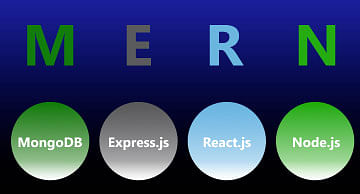
Fundamentals of MERN Stack

Fundamentals of Software Development

Full Stack Development Course
Programming with Python 3.X
Python for Beginners
JavaScript for Beginners
View More
Upcoming Webinars - Free Masterclasses
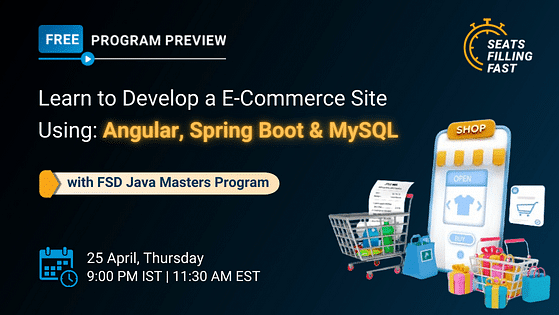
Learn to Develop a Full-Stack E-Commerce Site: Angular, Spring Boot & MySQL
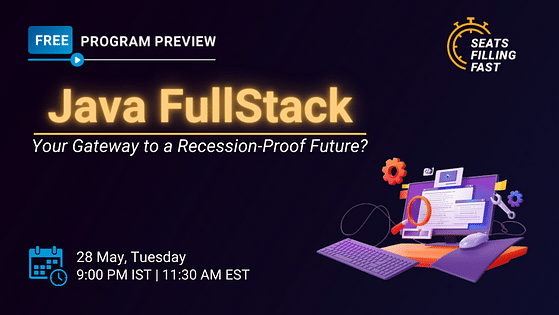
Java FullStack: Your Gateway to a Recession-Proof Future?

Code, Test, Deploy: How Software Developers Use GenAI Today
Articles and Ebooks That You Can Access For Free

Salesforce Developer Certification: An Overview

Skilling for the Digital Economy: A Role-Based Approach

23 In-Demand Full Stack Developer Skills in 2027

Average Full Stack Developer Salary













Salesforce Developer Certification: An Overview
Skilling for the Digital Economy: A Role-Based Approach
23 In-Demand Full Stack Developer Skills in 2027
Average Full Stack Developer Salary
Learners Also Explore






Connect with our learning consultant to get all your questions answered about programs, faculty, and more
Key Things to Know
A full-stack developer designs and builds both the front-end interface users see and the back-end systems that power it — including APIs, databases, and server infrastructure. They can own a feature from the database schema to the deployed UI.