
Manual Testing Courses
Top 3 Manual Testing Courses for 2026
Ranked by learner rating across our 34 Manual Testing programs



Empowering Millions Through Professional Learning
- switchup4.6
- Trustpilot4.6Excellent
- Course Report4.5
Manual Testing Skills You Will Build
The core capabilities you’ll practice across Manual Testing programs
- Agile
- API Contract Testing
- API Testing with Postman
- AWS
- Basic XPathCSS Selectors
- Introduction to fine tuning concepts
- Java
- JDBC
- LLM fundamentals
- Multimodal prompts
- Performance Test Planning
- Prompt engineering
- TDD with TestNG
Universities and Technology Partners Behind These Programs



AI-Powered Automation Test Engineer Program
- 4.5 out of 5
- 3.5K+ learners
- 6 months
Cohort starts: 30th Oct ’266 days left
- Intermediate to advanced
- Live cohort
View more about AI-Powered Automation Test Engineer Program
AI-Powered Automation Test Engineer Program is a live cohort certificate program, rated 4.5 out of 5 by 3.5K+ learners. Runs 6 months. Best for experienced practitioners.
e-Post Graduate Diploma (ePGD) in IC Design
- 4.6 out of 5
- 600+ learners
- 18 months
- Intermediate to advanced
View more about e-Post Graduate Diploma (ePGD) in IC Design
e-Post Graduate Diploma (ePGD) in IC Design is an online certificate program offered with IIT Bombay, rated 4.6 out of 5 by 600+ learners. Runs 18 months. Best for experienced practitioners.
Full Stack Development Program with Generative AI
- 4.8 out of 5
- 300+ learners
- 20 weeks
- Intermediate to advanced
View more about Full Stack Development Program with Generative AI
Full Stack Development Program with Generative AI is an online certificate program offered with UC Santa Barbara Professional and Continuing Education, rated 4.8 out of 5 by 300+ learners. Runs 20 weeks. Best for experienced practitioners.
C|EH v13- Certified Ethical Hacker
- 4.5 out of 5
- 12.6K+ learners
- 2 Months
Cohort starts: 7th Nov ’2614 days left
- Intermediate to advanced
- Live cohort
View more about C|EH v13- Certified Ethical Hacker
C|EH v13- Certified Ethical Hacker is a live cohort certification course, rated 4.5 out of 5 by 12.6K+ learners. Runs 2 Months. Best for experienced practitioners.

CISA®- Certified Information Systems Auditor
- 4.5 out of 5
- 7.8K+ learners
- 1 Month
Cohort starts: 20th Nov ’2627 days left
- Intermediate to advanced
- Live cohort
View more about CISA®- Certified Information Systems Auditor
CISA®- Certified Information Systems Auditor is a live cohort certification course, rated 4.5 out of 5 by 7.8K+ learners. Runs 1 Month. Best for experienced practitioners.



Manual Testing Overview
A manual testing training course is often accessible to learners without extensive programming experience, making it a common entry point into software testing careers. Our manual testing courses are suitable for anyone aiming to enter software testing or quality assurance roles.
|
Learner Type |
Relevance |
|
Students and graduates |
Learn QA/testing fundamentals |
|
Aspiring QA professionals |
Build entry-level testing skills |
|
IT professionals |
Add QA knowledge to development roles |
|
Career switchers |
Move into software testing careers |
Manual testing often serves as a starting point for careers in automation testing, QA engineering, and software testing management roles. Our manual testing certification courses help prepare for roles involved in software validation and QA workflows, like:
|
Job Role |
Salary Insight |
|
Manual Tester |
Avg. $72,000/year (Indeed) |
|
QA Analyst/Test Analyst |
Avg. $85,000/year (Glassdoor) |
|
Test Engineer |
Avg. $96,000/year (PayScale) |
|
Test Lead |
Avg. $118,000/year (Talent.com) |
Yes. Many introductory online manual testing courses are designed for learners with no prior programming experience. Since manual testing focuses on understanding software behavior rather than writing code, beginners can start with foundational QA concepts.
Our introductory courses include guided exercises that help you understand how testing workflows operate within development teams.
Manual testing certification courses typically develop practical QA skills such as:
-
Writing and organizing test cases
-
Executing test scenarios
-
Identifying and documenting defects
-
Understanding functional and regression testing
-
Working with defect-tracking tools
You will also gain familiarity with how QA teams collaborate with developers during software releases.
Know more about Manual Testing Courses
Manual testing is the process of focusing on verifying software behavior through direct interaction with applications rather than automated scripts. It involves using testing techniques to evaluate workflows, validate requirements, and identify defects by simulating user actions across different environments.
Online manual testing courses introduce how software quality is assessed during development cycles. Under expert guidance, you will study the best practices for requirement analysis, test case creation, defect reporting, and test execution used by QA teams. Our manual testing certificate courses will also help you understand how testing supports the reliability of applications across web platforms, enterprise systems, and customer-facing software products.
Are Manual Software Testing Skills Still in Demand?
The skills remain relevant because automation cannot fully replace human evaluation of software behavior. Automation testing typically handles repetitive checks, while manual testing helps teams detect workflow issues, edge cases, and gaps in requirements during development.
Manual testing is especially important in agile environments where features are released frequently, and validation is needed before automation coverage is added.
|
According to the U.S. Bureau of Labor Statistics, employment for software developers, testers, and QA analysts is projected to grow 17% between 2023 and 2033. |
MarketsandMarkets estimates the testing services market will grow to $75.2 billion by 2028. |
Industries such as fintech, e-commerce, enterprise SaaS, healthcare software, and IT services continue to rely on manual testing alongside automated testing as part of quality assurance practices. |
Key Skills and Tools Covered in Manual Testing Courses
Our courses focus on software testing concepts and practical QA activities performed during the software development life cycle.
Core Skills
-
Test case design and execution
-
Requirement validation
-
Defect reporting workflows
-
Functional and regression testing
-
Understanding the software testing lifecycle
Tools and Testing Environments
-
JIRA (defect tracking)
-
Bugzilla (issue reporting)
-
TestRail (test case management)
-
Browser developer tools (application behavior review)
How Simplilearn Prepares You for Manual Testing Roles?
Our manual testing certification courses’ learning path focuses on actual QA workflows used in development environments. Training includes software testing principles, test case writing, defect tracking exercises, and simulated release testing scenarios. Plus, the flexible online learning schedule lets you learn while balancing work and academic commitments.
Why Learn Manual Testing With Simplilearn?
Our manual testing courses help you build practical testing skills while also offering career support, including LinkedIn profile and resume optimization, mock interviews, and more.
Structured modules, guided exercises, and a defined learning path help you gain confidence and demonstrate hands-on familiarity with real manual testing workflows.
The curriculum is regularly updated to reflect current industry practices, preparing you for real QA responsibilities across sectors. The expert-led courses also provide a completion certificate that strengthens your credibility with hiring managers and helps you stand out in competitive job interviews.
Connect with our learning consultant to get all your questions answered about programs, faculty, and more
Tools and Platforms Used in Our Manual Testing Courses
Get hands-on with the platforms and tools covered across our Manual Testing programs




















Recommended Learning Materials for Upskilling
Explore free webinars, tutorials, career guides, and practical reads to go deeper
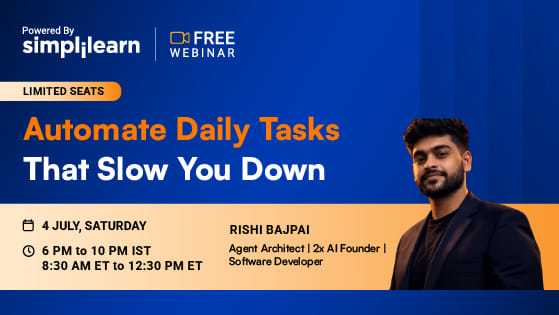
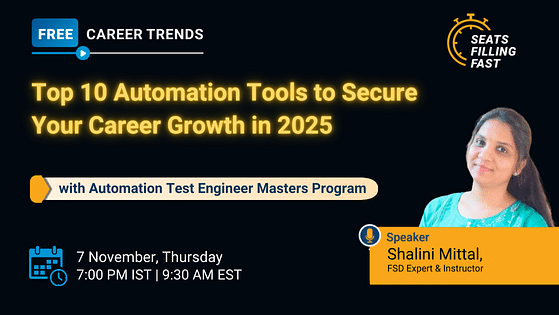
Upcoming Webinars - Free Masterclasses

Articles and Ebooks That You Can Access For Free


What Learners Say About Our Manual Testing Courses
Read what learners say about their learning experience

Jacob C
Compliance Officer at, Isomeric Pharmacy Solutions
"I enjoyed the classes and found them enriching and useful. I was allowed to connect with the teacher for doubt clarification and better understanding, which helped a lot."

Anne Jones
USF Health information system
"Very helpful and useful. "

Andrew Stella Vega
USF Health information system
"Very well structured course with a good variety of teaching mechanism. "
Manual Testing Courses: Frequently Asked Questions
Manual system testing means checking how software works by using it the way a real user would. This approach helps find usability problems, workflow mistakes, and missed requirements that automated tools or scripts might overlook.
Manual testing is especially useful in the early stages of development, when checking the user interface, and during exploratory testing. In these situations, human judgment is needed to perform checks that cannot be set up in advance with test scripts.
Most structured manual testing process courses include guided exercises that simulate real QA scenarios. The learning path allows you to practice validating application workflows, reporting defects, and reviewing expected versus actual behavior. These exercises often resemble testing tasks performed during software release cycles.
Employers value manual testing certifications that demonstrate practical QA knowledge and familiarity with testing workflows. Certifications usually show that a candidate understands software testing processes and defect-tracking practices. In entry-level QA hiring, certification, combined with hands-on project experience, often strengthens candidates' credibility.
Short manual testing certification training can take a few weeks to complete. Structured certification programs that include projects and guided exercises typically take 2–6 months, depending on your learning pace and course format.
Self-paced online courses are suitable for learners who want to progress at their own pace while balancing work or academic commitments.

*All salary figures referenced are based on data reported by employees on Glassdoor. These figures are estimates and may vary depending on location, experience level, company policies, and market conditions. Actual compensation may differ.