
Data Protection Courses
Top 3 Data Protection Courses for 2026
Ranked by learner rating across our 46 Data Protection programs

Rank #2

Professional Certificate Course in AI-Powered Data Analytics
Cohort starts: 30th Oct ’26 6 Days Left

Empowering Millions Through Professional Learning
- switchup4.6
- Trustpilot4.6Excellent
- Course Report4.5
Data Protection Skills You Will Build
The core capabilities you’ll practice across Data Protection programs
- Conversational AI
- Core Python Programming
- Data Manipulation amp Analysis
- Data Science
- Data Visualization
- Database Management SQL
- Deep Learning Frameworks
- Descriptive Statistics
- Ensemble Learning
- Explainable AI
- Exploratory Data Analysis
- Generative AI amp LLMs
- Inferential Statistics
Universities and Technology Partners Behind These Programs


Professional Certificate Course in AI-Powered Data Analytics
- 4.8 out of 5
- 5K+ learners
- 7 months
- Intermediate to advanced
View more about Professional Certificate Course in AI-Powered Data Analytics
Professional Certificate Course in AI-Powered Data Analytics is an online certificate program offered with E & ICT Academy, IIT Kanpur, rated 4.8 out of 5 by 5K+ learners. Runs 7 months. Best for experienced practitioners.
Professional Certificate in Data Analytics & GenAI
- 4.6 out of 5
- 400+ learners
- 30 weeks
- Intermediate to advanced
View more about Professional Certificate in Data Analytics & GenAI
Professional Certificate in Data Analytics & GenAI is an online certificate program offered with UC Santa Barbara Professional and Continuing Education, rated 4.6 out of 5 by 400+ learners. Runs 30 weeks. Best for experienced practitioners.
Professional Certificate Program in AI-Powered Data Analytics
- 4.9 out of 5
- 5.1K+ learners
- 7 months
- Intermediate to advanced
View more about Professional Certificate Program in AI-Powered Data Analytics
Professional Certificate Program in AI-Powered Data Analytics is an online certificate program offered with IITM Pravartak, rated 4.9 out of 5 by 5.1K+ learners. Runs 7 months. Best for experienced practitioners.
AI Powered Data Analyst Course
- 4.9 out of 5
- 31.3K+ learners
- 6 months
Cohort starts: 20th Nov ’2627 days left
- Intermediate to advanced
- Live cohort
View more about AI Powered Data Analyst Course
AI Powered Data Analyst Course is a live cohort certificate program, rated 4.9 out of 5 by 31.3K+ learners. Runs 6 months. Best for experienced practitioners.

AI-Powered Data Analytics: From Data to Decisions
- 4.5 out of 5
- 200+ learners
- 15 weeks
Cohort starts: 10th Nov ’2617 days left
- Intermediate to advanced
- Live cohort
View more about AI-Powered Data Analytics: From Data to Decisions
AI-Powered Data Analytics: From Data to Decisions is a live cohort certificate program offered with Columbia Engineering Executive Education - SL, rated 4.5 out of 5 by 200+ learners. Runs 15 weeks. Best for experienced practitioners.





Data Protection Overview
Most data protection training courses build capability across the full lifecycle:
Core concepts
- Data discovery and classification (finding sensitive data, labeling, and mapping flows)
- Access controls (least privilege, role-based access, MFA, and privileged access hygiene)
- Encryption basics + key management awareness (protecting data at rest/in transit)
- Retention and deletion rules (reducing data sprawl and long-tail risk)
- Monitoring + incident workflows (logs, alerts, triage, and evidence capture)
- Privacy-by-design patterns (minimization, masking, and anonymization where appropriate)
Tools covered
A lot of privacy work is “show me proof.” That’s where reporting and automation skills help:
Data protection courses online are a fit for:
- IT, security, and SOC teams managing access, monitoring, and incident response
- BI/data teams publishing dashboards and handling shared datasets
- Audit, compliance, and risk teams building evidence and control tracking
- Managers accountable for customer data, vendor sharing, or internal process controls
Beginners gain a clear “what to protect + how to prove it” foundation. Experienced professionals sharpen control mapping, reporting, and audit workflows; the parts that usually break under pressure.
Most data protection programs have no strict eligibility requirements. What matters is whether your role involves data handling, access, reporting, vendors, or audits, and whether you can follow a process and clearly document decisions.
What you typically need
-
A basic understanding of how data moves in a business (collected → stored → shared → used)
-
Comfort with everyday work tools (spreadsheets, email, dashboards, and shared drives)
-
Ability to write simple documentation (checklists, approvals, and audit notes)
Helpful, but not required
-
1–2 years in IT, analytics, operations, risk, audit, HR, or customer-facing teams
-
Familiarity with security basics (access control, logging, and encryption concepts)
If you plan to build reporting and evidence skills alongside privacy learning, you do not need to be “technical,” but you should be open to step-by-step practice.
Know more about Data Protection Courses
Data protection courses train professionals in securing the sensitive data of individuals and companies. This may include customer PII, employee records, financial details, contracts, and internal operational data. You are taught where a leak begins and what can be done by some means of control that one can run and demonstrate.
In today's economy, data protection is a critical pillar for both compliance and customer trust. Audits are easier, and incident response is quicker when teams can demonstrate who, what, and why accessed what and when.
Market Demand and Industry Relevance in 2026
Data privacy has become integral to many countries. Today, most markets have some form of privacy or data protection law in place; UNCTAD’s tracker puts the figure at 79%. Teams are expected to run controls in day-to-day work, keep clean records, and pull evidence quickly when audits or incidents hit.
Gartner estimates global end-user spending on information security will reach $240 billion in 2026. This means: more investment, more scrutiny, and more demand for professionals who can operationalize privacy and security together. Thus, the demand for data protection skills has risen.
This demand has been seen across banking and insurance, healthcare, retail, telecom, SaaS, and manufacturing, because the risk is not industry-specific. The data exposure patterns are.
Career Scope and Professional Opportunities After Data Protection Courses
Data protection programs support roles that connect security, risk, and governance. Common titles include:
- Privacy or Data Protection Analyst
- GRC Analyst
- Data Governance Specialist/Data Steward
- Risk and Controls Specialist
- Privacy Program Coordinator
Career growth often comes from expanding beyond “what the law says” into how controls run in systems, and how results are communicated through dashboards and evidence packs.
How Simplilearn’s Data Protection Programs Build Industry-Ready Data Protection Skills
Simplilearn’s approach is execution-led: build capability that shows up in day-to-day protection work, like data handling discipline, controlled sharing, and audit-ready reporting. If you want tool depth that supports privacy operations, explore:
Why Choose Simplilearn for Data Protection Courses
When comparing data protection training courses, prioritize learning that connects principles to operating reality: how data is accessed, how exceptions are tracked, and how evidence is packaged. Simplilearn’s strength is practical, tool-aligned learning that supports modern data protection programs, without anchoring your plan to a single, short-lived program name.
Connect with our learning consultant to get all your questions answered about programs, faculty, and more
Tools and Platforms Used in Our Data Protection Courses
Get hands-on with the platforms and tools covered across our Data Protection programs



















Recommended Learning Materials for Upskilling
Explore free webinars, tutorials, career guides, and practical reads to go deeper
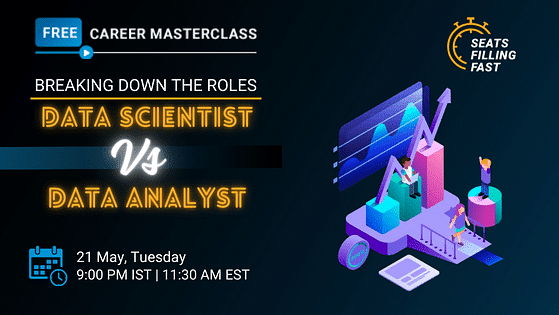
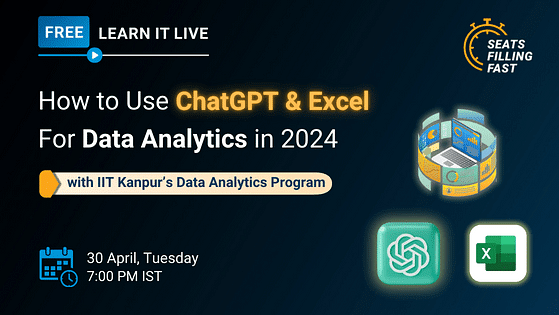
Upcoming Webinars - Free Masterclasses
Articles and Ebooks That You Can Access For Free


Data Protection Courses: Frequently Asked Questions
The “most recognized” data protection certifications usually fall into two buckets: privacy credentials for individuals and privacy standards used by organizations.
Widely recognized privacy certifications (individual):
-
IAPP (CIPP, CIPM, CIPT): CIPP is offered in regional tracks (for example, Europe, U.S., and Asia), CIPM focuses on running privacy operations, and CIPT connects privacy requirements to technical implementation
-
ISACA CDPSE: A strong pick if you want a privacy credential that leans into building and implementing privacy solutions (privacy governance, risk, and lifecycle)
-
GDPR-focused DPO/practitioner routes: Often used for EU-aligned privacy roles through providers such as EXIN or PECB (common in DPO-track hiring)
Recognized privacy standard (organizational):
ISO/IEC 27701 (PIMS): A globally recognized privacy framework that extends ISO/IEC 27001-style security management into privacy controls and accountability
Data protection courses align with GDPR, India’s DPDP framework, and other global regulations by teaching the shared operating model behind compliance: collect only what you need, control access, document purpose, and be able to prove safeguards.
Most global laws converge on a few pillars: lawfulness and transparency, purpose limitation, data minimization, accuracy, storage limitation, security, and accountability (set out clearly under GDPR principles). Courses translate these principles into workflows that teams can execute and audit:
-
Notices, consent, and records: Clear notices, consent capture (where required), and processing records that stand up in reviews
-
Access and sharing controls: RBAC, approvals, least privilege, and audit logs
-
Retention and deletion: Keeping data only as long as needed, then deleting in a controlled way
-
Privacy by design: Building safeguards into systems and default settings (GDPR Article 25)
For India specifically, the DPDP Rules, 2025 operationalize the DPDP Act with practical expectations around notice/consent, safeguards, and accountability, so many courses add “India-ready” documentation and control patterns alongside GDPR-style requirements.
Yes. Data protection certifications are a strong fit for professionals transitioning from legal or IT, because privacy work lives in the overlap: interpret obligations, translate them into controls, and prove those controls with evidence.
If you’re coming from legal/compliance: Certifications help you move from “what the law says” to “how it runs in practice”: data mapping, vendor risk reviews, incident workflows, and the documentation auditors expect (records, approvals, exceptions, and remediation proof).
If you’re coming from IT/security/data: Certifications add the regulatory “why” behind controls, such as purpose limitation, minimization, retention, and rights handling, so your access, logging, and security measures align with compliance expectations, not just security best practice.
For beginners, data protection certification exams are moderately challenging. The hard part is usually scenario judgment, not memorizing definitions, like questions often ask what you should do when multiple options sound “almost right”.
What typically makes them easier:
-
Process experience helps: If you’ve worked with SOPs, audits, vendor reviews, or risk logs, the decision logic clicks faster
-
Hands-on data exposure helps: Even basic familiarity with datasets and “what oversharing looks like” improves accuracy
-
Practice beats reading: These exams reward selecting the safest, most defensible action and knowing what evidence you’d keep
Plan real prep time. The IAPP itself recommends a minimum of 30 hours of study for its certifications, and beginners often need at least that.

*All salary figures referenced are based on data reported by employees on Glassdoor. These figures are estimates and may vary depending on location, experience level, company policies, and market conditions. Actual compensation may differ.