
Python Machine Learning Courses
Top 3 Python Machine Learning Courses for 2026
Ranked by learner rating across our 49 Python Machine Learning programs

Rank #2
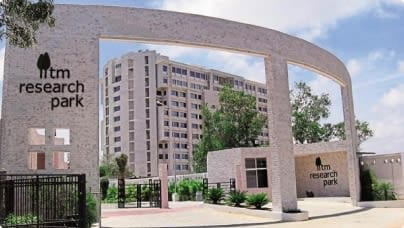
Professional Certificate in Generative AI, Machine Learning, and Intelligent Control Systems
Cohort starts: 5th Nov ’26 12 Days Left
Rank #3

Professional Certificate Course in Generative AI and Machine Learning
Cohort starts: 4th Nov ’26 11 Days Left
Empowering Millions Through Professional Learning
- switchup4.6
- Trustpilot4.6Excellent
- Course Report4.5
Python Machine Learning Skills You Will Build
The core capabilities you’ll practice across Python Machine Learning programs
- Boosting and Bagging Techniques
- Decision Tree Construction
- Deep Learning Fundamentals
- K-Means Clustering
- Kernel SVM
- Linear and Logistic Regression
- Naive Bayes Classification
- Random Forest Classifiers
- Supervised and Unsupervised Learning
- Time Series Modeling
- Computer Vision
- Deep Learning
- Ensemble Methods
Universities and Technology Partners Behind These Programs



Machine Learning using Python
- 4.6 out of 5
- 64.9K+ learners
- 4 Weeks
Cohort starts: 29th Oct ’265 days left
- Intermediate to advanced
- Live cohort
View more about Machine Learning using Python
Machine Learning using Python is a live cohort certification course, rated 4.6 out of 5 by 64.9K+ learners. Runs 4 Weeks. Best for experienced practitioners.
Professional Certificate in Generative AI, Machine Learning, and Intelligent Control Systems
- 4.9 out of 5
- 9K+ learners
- 6 months
- Intermediate to advanced
View more about Professional Certificate in Generative AI, Machine Learning, and Intelligent Control Systems
Professional Certificate in Generative AI, Machine Learning, and Intelligent Control Systems is an online certificate program offered with IITM Pravartak, rated 4.9 out of 5 by 9K+ learners. Runs 6 months. Best for experienced practitioners.
Professional Certificate Course in Generative AI and Machine Learning
- 4.8 out of 5
- 9K+ learners
- 11 months
- Intermediate to advanced
View more about Professional Certificate Course in Generative AI and Machine Learning
Professional Certificate Course in Generative AI and Machine Learning is an online certificate program offered with E & ICT Academy, IIT Kanpur, rated 4.8 out of 5 by 9K+ learners. Runs 11 months. Best for experienced practitioners.
Professional Certificate in AI and Machine Learning
- 4.8 out of 5
- 4.1K+ learners
- 24 weeks
Cohort starts: 29th Oct ’265 days left
- Intermediate to advanced
- Live cohort
View more about Professional Certificate in AI and Machine Learning
Professional Certificate in AI and Machine Learning is a live cohort certificate program offered with Michigan Engineering Professional Education, rated 4.8 out of 5 by 4.1K+ learners. Runs 24 weeks. Best for experienced practitioners.
Professional Certificate in AI and Machine Learning
- 4.5 out of 5
- 500+ learners
- 6 months
- Intermediate to advanced
View more about Professional Certificate in AI and Machine Learning
Professional Certificate in AI and Machine Learning is an online certificate program offered with UC Santa Barbara Professional and Continuing Education, rated 4.5 out of 5 by 500+ learners. Runs 6 months. Best for experienced practitioners.



Python Machine Learning Overview
Python machine learning courses are centered on building predictive models using Python's core data science libraries. Learners work through the full modeling process of preparing datasets, training supervised and unsupervised algorithms, evaluating performance using statistical metrics, and improving models based on the results.
Most Python machine learning courses expect basic familiarity with Python syntax, variables, loops, and functions. It is also recommended to have a basic understanding of statistics and be comfortable working with tabular data before starting.
For learners who need preparation, foundational Python modules can be completed before moving on to core machine learning concepts and workflows.
Our Python machine learning courses are structured around applied, hands-on work, and learners engage directly with real datasets rather than following along with pre-solved examples.
Throughout the training, learners:
-
Clean and prepare raw datasets prior to modeling
-
Build and compare multiple models to evaluate trade-offs
-
Assess performance using metrics such as precision, recall, and ROC curves
-
Tune hyperparameters to improve model outcomes
The focus is on measurable model performance rather than theoretical abstraction.
Projects reflect real predictive modeling use cases, such as:
-
Customer churn prediction
-
Sales forecasting
-
Classification problems using structured datasets
-
Recommendation logic based on historical behavior
Capstones may require building an end-to-end pipeline from data ingestion through model validation and reporting.
Know more about Python Machine Learning Courses
Python is widely used in machine learning to build systems that make predictions from data. Developers train models on structured datasets and then test how well those models perform using standard evaluation metrics.
In real-world applications, it’s not just about accuracy. Teams also have to consider data quality, response time, scalability, and how reliably the system performs once it’s deployed.
Our Python machine learning courses offer hands-on training to help you implement systems. You will also be able to create datasets, implement supervised and unsupervised models, evaluate the results, and optimize the system, as well as integrate the trained model with analytics and production environments.
|
Aspect |
General Python Programming |
Python Machine Learning Courses |
|
Focus |
Syntax, scripting, and application logic |
Building predictive models using structured datasets |
|
Goals |
Develop software, scripts, and automation tools |
Deliver validated models that support forecasting and classification |
|
Learning Approach |
Coding exercises and application-based projects |
Dataset experimentation, model training, and evaluation workflows |
|
Skill Sets |
Core programming fundamentals |
Feature engineering, algorithm selection, and performance measurement |
|
Career Paths |
Software Developer |
Machine Learning Engineer, Data Scientist, AI Engineer |
Python programming lays the groundwork. Machine learning courses use Python to implement structured modeling workflows where system performance, validation, and reproducibility matter.
What’s the Market Demand for Python Machine Learning?
Python machine learning is no longer a niche capability. It is central to modern analytics and predictive systems.
-
The U.S. Bureau of Labor Statistics projects 34% employment growth for data scientists from 2024 to 2034, much faster than the average for all occupations
-
Grand View Research estimates the global machine learning market was valued at USD 55.80 billion in 2024 and is expected to grow at 30.4% CAGR from 2025 to 2030
-
The World Economic Forum lists AI and big data among the fastest-growing skills for 2025–2030
In 2026, Python remains the dominant language for machine learning development because it supports end-to-end workflows from data preparation through model evaluation and deployment.
What Career Opportunities Open After Python Machine Learning Courses?
Python machine learning courses supports roles focused on applied modeling and predictive systems, such as:
-
Machine Learning Engineer
-
Data Scientist
-
AI Engineer
-
Data Analyst (ML-focused)
-
Applied Machine Learning Practitioner
Organizations rely on these professionals to develop forecasting systems, classification models, recommendation engines, and optimization pipelines that support measurable outcomes
What’re the Python Machine Learning Skills & Tools Covered?
Python machine learning courses help develop practical skills, helping you to prepare data, evaluate trained models, and refine performance.
Skills developed include:
Supervised learning (regression and classification), unsupervised learning (clustering and dimensionality reduction), feature engineering, cross-validation, hyperparameter tuning, and evaluation using metrics such as precision, recall, F1-score, and ROC curves.
Tools covered include:
Python, NumPy, Pandas, Scikit-learn, foundational TensorFlow or PyTorch workflows, Jupyter notebooks, and visualization libraries used in exploratory data analysis.
Who Can Enroll in the Python Machine Learning Courses?
Our Python machine learning courses are designed for learners of all levels. It can be taken by early-career professionals building technical skills and software developers looking to move into data-focused roles. Data analysts who want to shift from reporting to predictive modeling will also find the curriculum useful.
While it's not mandatory, prior knowledge of Python and basic statistics will be helpful. If someone needs a refresher, they can start with foundation modules before moving on to the core machine learning concepts and workflows.
How Simplilearn Makes You Industry-Ready
Our programs combine instructor-led sessions, guided labs, and applied projects aligned with real predictive modeling tasks. You practice by preparing datasets, training algorithms, validating model performance, and refining outputs based on measurable metrics. You also get to work on capstone projects that show how teams deliver machine learning features in production environments.
Why Choose Simplilearn for Python Machine Learning Courses?
Our Python Machine Learning courses are designed to help you become job-ready. You'll learn through live, instructor-led sessions, work on real projects, and gain hands-on experience with full-stack frameworks that companies are actively using today.
Plus, you receive an industry-recognized certificate and career support, including interview preparation and resume guidance. The curriculum focuses on interpreting results, improving model accuracy, and understanding trade-offs, so you’re not just running algorithms, you’re learning how to make informed decisions based on data.
Connect with our learning consultant to get all your questions answered about programs, faculty, and more
Tools and Platforms Used in Our Python Machine Learning Courses
Get hands-on with the platforms and tools covered across our Python Machine Learning programs


.png)














Recommended Learning Materials for Upskilling
Explore free webinars, tutorials, career guides, and practical reads to go deeper
Upcoming Webinars - Free Masterclasses

Articles and Ebooks That You Can Access For Free


What Learners Say About Our Python Machine Learning Courses
Read what learners say about their learning experience

Mushtaque Ansari
Senior Software Developer, Accion Labs
"I thoroughly enjoyed my Data Science with Python course at Simplilearn. Vaishali's adept teaching, blending theory with practical applications in live sessions, made complex concepts clear. Grateful for the enriching experience!"

Brian
Program Manager (iGPM RBEI), Robert Bosch Engineering and Business Solutions Private Limited
"The training for the data science with Python course was meticulously organized, led by a seasoned instructor proficient in practical application. The trainer handled responses and queries efficiently with a good amount of patience, ensuring a smooth learning experience."

Vignesh Manikandan
"The data science with python course offered online was excellently structured, facilitating rapid learning. Vaishali's expertise and professionalism ensured each session was insightful. Grateful for the wealth of knowledge gained in such a short span."

Satabdi Adhikary
"Simplilearn's courses are affordable and helped me learn something new during the lockdown. Moreover, I also got to add a Well-Known Global Name like Simplilearn to my resume. I could choose the trainer as well as enroll for multiple sessions using the Flexible Pass."

Shiv Sharma
"Prashant Nair is an awesome faculty. The way he simplifies, relates and explains topics is outstanding. I would love to enroll for and attend all his classes."

Deboleena Paul
Senior Technical Lead at, HCL Technologies
"My experience while doing machine learning certification from Simplilearnwas was beyond my expectation for an online classroom. The trainer was great. He was very patient and interactive. "
Leela Krishna
Senior Operations Professional at, IBM INDIA PVT. LTD.
"The course was very informative. The study material provided by the trainer was extremely helpful and very easy to understand. "
Python Machine Learning Courses: Frequently Asked Questions
Yes, our Python machine learning courses are suitable for beginners. It starts with foundational concepts and moves to more complex techniques, tools, and frameworks. It is also recommended to have a basic understanding of a programming language to follow along effectively.
Yes. Our Python machine learning courses are designed for working professionals. It includes live instructor-led sessions, recorded modules for self-paced review, hands-on labs, and projects. This allows working professionals and learners to make consistent progress without having to step away from their professional commitments.
The distinction lies in the scope and depth of application. Python machine learning courses are specifically focused on building and validating predictive models using libraries like NumPy, Pandas, and Scikit-learn, covering workflows around regression, classification, and clustering in a structured, implementation-driven way.
General AI courses cover topics such as natural language processing, computer vision, and generative systems. While comprehensive in range, the coverage tends to be more conceptual and less centered on hands-on model development.
For learners whose goal is to work directly with data and develop models that address defined business problems, Python machine learning training offers a more focused and practical path.
Yes. Our Python machine learning courses are designed to bridge the gap between business questions and structured modeling tasks, giving learners a workflow that reflects how predictive systems are actually built.
The Python machine learning courses curriculum covers:
-
Converting raw datasets into well-defined, usable features
-
Selecting algorithms based on the nature and requirements of the problem
-
Evaluating model performance against clearly established criteria
-
Interpreting outputs in a way that supports informed decision-making
Learners don't just build models; they understand why certain approaches work and how to communicate findings in a professional context.

*All salary figures referenced are based on data reported by employees on Glassdoor. These figures are estimates and may vary depending on location, experience level, company policies, and market conditions. Actual compensation may differ.