AI and ML Courses
Master the future of tech with our AI and machine learning courses online. These AI ML courses offer hands-on training with industry tools, preparing professionals across domain
Master the future of tech with our AI and machine learning courses online. These AI ML courses offer hands-on training with industry tools, preparing professionals across domains to build in-demand skills and thrive in top global roles.
Build neural networks for tasks like image recognition and predictive analysis
Deploy AI models into production environments to solve real business problems
Build the technical skillset required for AI Engineer and Machine Learning Engineer roles
Top 3 AI and ML Courses for 2026
Ranked highest among 100+ programs based on learner ratings
Key Skills You Will Build
The core capabilities you’ll practice across AI and ML programs
Computer Vision
Deep Learning
Ensemble Methods
Generative AI
Generative AI Architectures
Generative AI Models
Large Language Models
Machine Learning Algorithms
Model Evaluation and Validation
Model Training and Optimization
Natural Language Processing
Prompt Engineering
Reinforcement Learning
Browse AI and ML Courses
AI and ML Overview
These AI and Machine Learning courses covers the fundamentals of artificial intelligence and machine learning, including supervised and unsupervised learning, neural networks, deep learning, and natural language processing (NLP). Along with theory, the program includes hands-on projects and real-world case studies, ensuring learners gain practical experience through one of the best machine learning courses online. By completing these AI & ML courses, you’ll be able to apply skills directly in business and industry.
Know more about AI and ML Courses
A Brief Overview Of AI & ML Courses
Artificial intelligence and machine learning courses are designed to help learners explore the complete AI landscape. These AI and ML courses online are structured for both beginners and advanced professionals, off
A Brief Overview Of AI & ML Courses
Artificial intelligence and machine learning courses are designed to help learners explore the complete AI landscape. These AI and ML courses online are structured for both beginners and advanced professionals, offering flexible enrollment options. Such AI ML courses provide convenient learning while focusing on in-demand skills. Although not all AI and machine learning courses require Python, C++, or MATLAB, having basic knowledge of these programming languages can be beneficial.
...Connect with our learning consultant to get all your questions answered about programs, faculty, and more
Tools That Boost Your Skills
Get hands-on with the platforms and tools covered across our AI and ML programs
Recommended Learning Materials for Upskilling
Explore free webinars, tutorials, career guides, and practical reads to go deeper
Upcoming Webinars - Free Masterclasses


Skyrocket your AI/ML Career in 2024 with IIT Kanpur

How to Succeed as an AI/ML Engineer in 2024: Tools, Techniques, and Trends

How to Build a Career in AI and Machine Learning

From LLMs to Deep Learning – About The All-in-One AI Program

What a Machine Learning Engineer's Work Day Looks Like

How to Master Machine Learning Without Quitting Your Job

How GenAI Can Enhance Your Team's Productivity

Navigating the GenAI Frontier

Supercharge Your Career with Gen AI: What to Learn & When to Pivot

The Rise of GenAI: Reshaping Job Responsibilities Across Sectors

Build AI assistants like ChatGPT & Copilot

Agentic AI: The Next Big Shift in AI—What You Need to Know

Elevate Your Workflow: AI Essentials for Non-Programmers

How to Become an AI Engineer in 2026: Your Complete Roadmap

Live Workshop: Automate workflows using Agentic AI in 60 minutes

Unlock Your Interview Potential: Master Gen AI Tools for Success in 60 Minutes

DeepSeek AI: The Hype, The Reality & What's Next in AI

Automate Any Workflow with AI – No Coding Required!

How to Build an AI Agent in 60 Minutes?

Vibe Code It Live: Build Your Personal AI Coach

The GPT Revolution: Build Your Own AI Assistant in 60 Minutes

Empowering Your Workforce in the AI Era

Code, Test, Deploy: How Software Developers Use GenAI Today

How GenAI Empowers Project Managers Without Replacing Them

Career Masterclass: Become an AI-Savvy Project Manager: The Skills You Need to Thrive

How to use GenAI to Boost SEO Rankings: 60 Minute Masterclass

Skills to Stack: Getting Ready for Agentic AI

IDC Briefing: Closing the AI Skills Gap

AI UI/UX Designer: The New Job on the Rise in 2024

Learn How You Can Also Build Netflix-Like Movie Recommendations
Articles and Ebooks That You Can Access For Free
Meet Your Mentors

Amitendra Srivastava
Chief Data Scientist at Intelytica,
Amitendra’s expertise lies in utilizing data analysis and machine learning techniques to solve complex business problems and drive strategic decisions. As Chief Data Scientist, he leverages the power of data to create value and drive innovation.

Armando Galeana
Founder and CEO at Ubhuru Technologies,
A seasoned data science leader, with extensive experience in digital transformation. Throughout his career, Armando has leveraged his vast expertise in AI & ML to build infrastructure, create new lines of business and drive global implementations.

Max Goff
GenAI Consultant,
Max is a seasoned data scientist and big data engineer with 30+ years of experience in ML, big data, and computer programming. Known for his expertise in GenAI, NLP, and process improvement, Max has consistently driven innovation and growth across organizations.
Still Curious? Answers to Common AI and ML Questions
If you are just starting out, these beginner-friendly AI and machine learning courses provide a strong foundation in concepts, tools, and practical applications.
What are the top job titles in the field of AI and Machine Learning?
After completing these AI and machine learning courses online, you can pursue roles such as:
-
Data Scientist
-
Machine Learning Engineer
-
AI Engineer
-
Data Analyst
-
Business Intelligence (BI) Analyst
-
Natural Language Processing (NLP) Specialist
-
Deep Learning Specialist
-
Computer Vision Engineer
These roles are in demand across industries, including technology, healthcare, finance, and e-commerce.
What is the recommended career path for AI and Machine Learning aspirants?
Professionals and students hoping to become AI Engineers should first start learning the basics of AI, statistical analysis, data modeling, and know at least one programming language such as Python or R. They should then move on to advanced areas like data analysis, data manipulation, Hadoop, and machine learning. Knowledge of deep learning and business intelligence tools like Tableau or Qlikview would further enhance your AI career.
What is the average salary of AI and Machine Learning professionals?
Professionals who have completed one of these AI ML courses can expect competitive salaries, which vary based on experience, specialization, and industry. Here's a breakdown:
|
Role |
Average Annual Salary(₹) |
|
Data Scientist |
|
|
Machine Learning Engineer |
|
|
AI Engineer |
|
|
Data Analyst |
|
|
Business Intelligence (BI) Analyst |
|
|
Natural Language Processing (NLP) Specialist |
|
|
Deep Learning Specialist |
|
|
Computer Vision Engineer |
Note: Salaries will vary based on factors such as company, location, and individual qualifications. The figures provided are averages and may differ across different regions and organizations.
Which are the top industries suitable for AI and Machine Learning professionals?
Industrial sectors such as information technology, FinTech, healthcare, BFSI, and ecommerce are best suited for AI professionals.
Which are the top hiring companies for AI and Machine Learning professionals?
Professionals skilled in AI and Machine Learning are highly sought after in a wide spectrum of companies, along with tech giants like Google, Accenture, IBM, Amazon, and Microsoft.
What is an AI and Machine Learning courses, and who should take one?
An Artificial Intelligence (AI) and Machine Learning (ML) courses provides structured training on creating systems that can learn from data to make predictions or decisions. These AI ML courses cover core concepts like supervised and unsupervised learning, deep learning, neural networks, and Natural Language Processing (NLP) to build job-ready skills for a variety of technical and business roles.
These programs are designed for a diverse range of professionals, including:
-
IT Professionals and Software Developers: Individuals in these roles can upskill to build intelligent applications, automate processes, and transition into specialized positions like AI Engineer or ML Specialist. The curriculum often includes Python refreshers and foundational modules to support this transition.
-
Data Scientists and Analytics Professionals: These courses offer a path to master the latest AI models, including deep learning and generative AI, moving beyond traditional data analysis into predictive modeling and AI solution architecture.
-
Business Leaders and Product Managers: For non-technical leaders, specialized courses focus on AI strategy, identifying business opportunities, managing AI projects, and understanding the ROI of AI implementation without requiring deep coding knowledge. Programs like the Professional Certificate Programme in AI-Powered Decision Making with IIM Kozhikode are tailored for this audience.
-
Recent Graduates and Career Changers: Foundational programs are designed for beginners with a bachelor's degree who want to enter the high-growth technology sector. These courses build fundamental knowledge in programming and statistics before moving to advanced AI concepts.
-
Domain Experts (Healthcare, Finance, Marketing): Professionals in various sectors can learn to apply AI and ML to their specific fields, using data to drive innovation in areas like medical diagnostics, fraud detection, or personalized marketing campaigns.
Why is Simplilearn a strong choice for AI and Machine Learning courses in 2026?
Our AI and Machine Learning programs are structured as comprehensive hands-on training, distinguishing them from passive, video-based learning platforms. The model emphasizes live instruction, continuous support, and curriculum co-developed with leading universities and corporations to build practical, job-ready expertise applicable in 2026's competitive market.

This approach is built on several core differentiators:
-
Blended Learning with Live Instruction: Unlike purely self-paced MOOCs, the core of the learning experience is live, instructor-led virtual classrooms. This format promotes accountability, allows for real-time doubt clarification with industry experts, and ensures the curriculum remains current with industry trends.
-
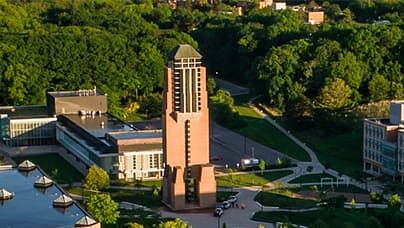
University and Industry Partnerships: Programs are offered in collaboration with globally recognized institutions like Purdue University Online, Michigan Engineering Professional Education, IIT Kanpur, and IIM Kozhikode. This model provides academic rigor, co-branded certificates, and access to faculty masterclasses, enhancing the credential's value to employers.
-
Comprehensive Learner Support: A key differentiator is the 24/7 support system. Learners have access to teaching assistants for immediate help with technical questions, dedicated cohort managers for logistical guidance, and mentoring sessions for project assistance, preventing the isolation common in online learning.
-
Hands-On, Project-Based Curriculum: Learning is centered on application. Programs include dozens of hands-on projects and integrated cloud labs with pre-configured tools like TensorFlow and Microsoft Azure AI Studio. This focus on building real-world solutions ensures graduates have a demonstrable portfolio of their skills.
What are the best AI and Machine Learning courses available at Simplilearn?
The "best" AI and Machine Learning course depends entirely on an individual's background and specific career objectives. Top programs provide a clear learning path from foundational principles to advanced, real-world skills, blending live online classes with hands-on labs and offering credentials from recognized universities and industry partners.
To find the right fit, consider these paths based on different career objectives:
-
For a Comprehensive Technical Career: The Professional Certificate in AI and Machine Learning, offered with partners like Purdue University Online and Michigan Engineering, is a strong choice. These six-month programs provide a deep, end-to-end curriculum covering Python, data science, deep learning, NLP, and generative AI, preparing learners for roles like AI Engineer or Machine Learning Specialist.
-
For Specializing in Generative AI: The Applied Generative AI Specialization with Purdue University Online is tailored for professionals who want to focus specifically on developing and deploying GenAI-enabled applications. It dives deep into LLM (large language models) architecture, prompt engineering, agentic AI frameworks, and AI governance.
-
For Business Leaders and Managers: For those focused on strategy over coding, the Generative AI for Business Transformation program with Purdue is ideal. It teaches how to leverage GenAI across functions like marketing, sales, and operations to drive efficiency and innovation. Similarly, the Professional Certificate Programme in AI-Powered Decision Making with IIM Kozhikode is designed for senior leaders.
-
For a Deep Dive with an IIT: The Professional Certificate Course in Generative AI and Machine Learning with E&ICT Academy, IIT Kanpur or IIT Guwahati offers an 11-month immersive experience. These programs feature masterclasses from IIT faculty and, in some cases, campus immersion experiences, providing strong academic credibility in the Indian market.
-
For Cloud-Specific AI Skills: The Microsoft AI Engineer Program is designed for individuals who want to specialize in building AI solutions on the Azure platform. It includes comprehensive training for the Microsoft Azure AI-900 certification exam and hands-on experience with tools like Azure OpenAI and Copilot Studio.
-
For Foundational Skills: For those just beginning, the Machine Learning using Python course provides a focused, four-week introduction to core concepts like regression, classification, and time series modeling, establishing a solid base for more advanced studies.
Are there university-affiliated AI and ML courses available online?
Yes, we collaborate with top-tier universities and institutions globally to offer online AI and Machine Learning programs that combine academic excellence with a practical, hands-on learning model. These partnerships provide learners with respected, co-branded credentials, access to faculty-led masterclasses, and entry into alumni networks upon completion.
Key university collaborations include:
-
Purdue University Online: This partnership includes programs like the Professional Certificate in AI and Machine Learning and the Applied Generative AI Specialization. These collaborations provide a joint Purdue-Simplilearn certificate and access to the Purdue Alumni Association membership.
-
Michigan Engineering Professional Education: We offer the Professional Certificate in AI and Machine Learning and the Applied Generative AI Specialization in collaboration with Michigan Engineering. Graduates receive a program completion certificate and a digital badge from Michigan Engineering Professional Education.
-
Indian Institutes of Technology (IITs): Programs are offered with the E&ICT Academies of IIT Kanpur and IIT Guwahati, such as the Professional Certificate Program in Generative AI and Machine Learning. These programs include masterclasses from IIT faculty and even campus immersion experiences.
-
Indian Institute of Management (IIM) Kozhikode: This collaboration offers the Professional Certificate Programme in AI-Powered Decision Making, which is designed for business leaders and provides an IIM Kozhikode completion certificate and Executive Education Alumni status.
What are the general prerequisites for enrolling in an AI and ML courses?
Most AI and Machine Learning programs are designed to be accessible to a broad audience and do not require an advanced degree in computer science. However, a basic understanding of mathematics and programming concepts is generally recommended to ensure success in the more technical modules of a course.
The general eligibility criteria typically include:
-
Educational Background: A bachelor's degree with a minimum average of 50 percent is a common requirement for postgraduate-level programs.
-
Work Experience: While not always mandatory, two or more years of formal work experience is often preferred for advanced certificate programs, as it provides valuable professional context.
-
Technical Aptitude: Familiarity with programming concepts, particularly in a language like Python, is beneficial. Many programs, such as the Professional Certificate in AI and Machine Learning, include a Python refresher module to establish a baseline for all learners.
-
Mathematical Foundation: A foundational knowledge of mathematics, including concepts from statistics and linear algebra, helps understand the mechanics behind machine learning algorithms.
Non-Technical Roles: For business-focused programs like Generative AI for Business Transformation, the prerequisites shift away from technical skills. The emphasis is on management experience and a strategic mindset, with no coding required.
What specific tools and programming languages are taught in these AI and ML courses?
The curricula of these AI and ML courses are built around a modern, industry-standard tech stack, ensuring learners gain proficiency in the most relevant tools and languages. Python is the primary programming language, supported by a comprehensive ecosystem of libraries and frameworks for machine learning, deep learning, and generative AI software development.
The key technologies covered in the curriculum include:
-
Core Language and Libraries: Python is the foundational language, with in-depth instruction on essential libraries such as NumPy for numerical computation, Pandas for data manipulation, and Matplotlib and Seaborn for data visualization.
-
Machine Learning Frameworks: Learners gain hands-on experience with Scikit-learn, the industry-standard library for traditional machine learning tasks like regression, classification, and clustering.
-
Deep Learning Platforms: The courses provide extensive training in TensorFlow and Keras, two of the most powerful and widely used frameworks for building and deploying neural network architectures and deep learning models.
-
Generative AI and LLM Tools: Specialized modules cover the latest generative AI tools, including OpenAI's ChatGPT and DALL-E 2, Google's Gemini, and the HuggingFace platform for working with open-source models.
-
Application Development and Orchestration: Instruction is provided on frameworks like LangChain for building LLM-powered applications and tools like Gradio and Streamlit for creating interactive user interfaces for AI models.
-
Cloud AI Platforms: Many programs, particularly the Microsoft AI Engineer Program, integrate hands-on training with cloud services like Microsoft Azure AI Studio, Azure OpenAI, and Microsoft Copilot Studio.
Do Simplilearn's AI and ML courses include hands-on labs or real-world projects?
Yes, a core principle of our AI and ML programs is learning by doing, with every course built around extensive hands-on application. The curriculum integrates numerous industry-aligned projects and cloud-based labs to ensure that learners can translate theoretical knowledge into practical, demonstrable skills and build a strong professional portfolio.
The hands-on learning is delivered through several components:
-
Integrated Lab Environments: Courses come with seamless access to integrated labs where all necessary tools, libraries, and datasets are pre-configured. This allows learners to start practicing immediately with technologies like TensorFlow, Python, and Azure AI without complex setup procedures.
-
Industry-Relevant Projects: Learners complete a significant number of hands-on projects, often more than 15 or 25, depending on the program, which are designed to solve real-world business problems. Project examples include building a model to predict employee attrition, developing a song recommendation engine, and creating an AI-powered HR assistant.
-
Capstone Projects: Most comprehensive programs culminate in a capstone project. This final project requires learners to apply all the skills they have acquired throughout the course to tackle a complex, industry-specific challenge from start to finish.
-
Hackathons and Interactive Sessions: Partnerships with companies like IBM provide additional hands-on opportunities, such as exclusive hackathons and "ask-me-anything" sessions that further cement practical skills.
How are advanced concepts like Deep Learning and Natural Language Processing (NLP) covered?
Advanced topics such as Deep Learning and Natural Language Processing (NLP) are covered through dedicated, in-depth modules within the comprehensive AI and ML programs. These sections move beyond foundational machine learning to provide specialized skills in building and deploying complex artificial neural networks and systems that can understand and process human language.
These topics are explored through the following specialized modules:
-
Deep Learning Specialization: Programs include a specific module on Deep Learning with Keras and TensorFlow. This covers the distinctions between machine learning and deep learning, the architecture of artificial neural networks, and concepts like forward and backward propagation.
-
Advanced Neural Network Architectures: Learners explore key deep learning models, including Convolutional Neural Networks (CNNs) for image analysis and object detection, and Recurrent Neural Networks (RNNs) for sequential data.
-
Natural Language Processing (NLP): A dedicated NLP module focuses on applying the latest machine learning algorithms to process language data. It covers essential concepts like feature engineering, natural language understanding, and text generation.
-
Speech Recognition: The NLP curriculum also extends to speech technologies. It includes instruction on automated speech recognition, text-to-speech conversion, and the development of voice assistance tools, including building skills for platforms like Alexa.
-
Reinforcement Learning: Some advanced programs, like the one with IIT Kanpur, include a module on Reinforcement Learning (RL). This covers the foundational principles and application of RL techniques for problem-solving using Python and TensorFlow.
What is the role of a capstone project in these programs?
The capstone project serves as the culmination of the learning journey in our comprehensive AI and ML programs. It is an essential, hands-on component designed to bridge the gap between academic learning and real-world application, allowing learners to synthesize their skills and showcase their job-readiness to potential employers.
Its primary roles within the learning journey are to:
-
Synthesizing Knowledge: The capstone project requires participants to integrate and apply the full range of skills learned throughout the program, from data science and machine learning to deep learning and generative AI courses, to solve a single, complex problem.
-
Solving Real Industry Challenges: These projects are designed to mirror real-world business challenges. Learners work with publicly available datasets from actual organizations to develop solutions for industry-specific problems.
-
Building a Professional Portfolio: Completing the capstone provides a significant, portfolio-worthy piece of work. It serves as tangible proof of a learner's ability to manage an end-to-end AI project, a valuable asset during a job search.
-
Mentor Guidance: Throughout the capstone project, learners receive guidance and support from industry mentors. This ensures they stay on track and can successfully navigate the complexities of the project.
How is Generative AI integrated into the broader AI and Machine Learning curriculum?
Generative AI is integrated as a core and advanced component within the broader AI and Machine Learning curriculum, reflecting its growing importance in the industry. The programs are built from foundational AI principles to dedicated, specialized modules that cover the theory, tools, and application of generative models for creating new content.
This integration is achieved through several key curriculum elements:
-
Foundational Literacy: Programs begin with modules like Generative AI Literacy, which introduce learners to the fundamental concepts, key algorithms like Transformers, and the role of Large Language Models (LLMs) such as ChatGPT.
-
Dedicated Advanced Modules: The curriculum includes an Advanced Generative AI module that provides a deep dive into the architecture of models like VAEs and GANs, the function of attention mechanisms, and the development of LLM applications using frameworks like LangChain.
-
Prompt Engineering: A critical skill, Prompt Engineering, is taught in dedicated modules, often in collaboration with industry partners like IBM. This covers techniques for crafting effective prompts to achieve customized and accurate outputs from generative models.
-
Agentic AI: Cutting-edge concepts are introduced in masterclasses and modules on Agentic AI. These sessions explore the development of autonomous AI agents that can plan, reason, and execute complex tasks with minimal human intervention using frameworks like AutoGen.
-
Hands-On Projects: Learners apply these concepts through numerous hands-on projects, such as building an AI-powered HR assistant with a GPT model, creating a text-to-design platform with DALL-E, or fine-tuning a personalized LLM instance.
-
Governance and Ethics: The integration is both technical and strategic, with modules on Generative AI Governance that cover the ethical principles, risk management, and regulatory landscape associated with deploying these powerful technologies.
What job roles can I pursue after completing an AI and ML courses?
Upon completing an AI and ML courses, graduates are qualified for a wide range of technical and analytical roles that are in high demand across the global job market. The specific role depends on the depth and specialization of the program, but the skills acquired open doors to positions focused on building, analyzing, and deploying intelligent systems.
Graduates are prepared for several high-demand positions, such as:
-
Machine Learning Engineer: This is a very popular role focused on designing and building production-ready latest machine learning models and systems.
-
AI Engineer: A broader role that involves developing and implementing AI solutions, which can include machine learning, deep learning, and generative AI applications.
-
Data Scientist: This role uses AI and ML techniques to analyze complex data, extract actionable insights, and build predictive models to inform business strategy.
-
Deep Learning Engineer: A specialized position for professionals who focus on creating complex neural networks for tasks like computer vision and natural language processing.
-
NLP Engineer: This role concentrates on building systems that can understand, interpret, and generate human language, such as chatbots or sentiment analysis tools.
-
AI Architect: A senior-level position responsible for designing the overall structure and framework for an organization's AI systems and infrastructure.
-
Business Intelligence (BI) Developer: This role leverages AI and data analysis to create data-driven insights and strategies for business growth.
Are AI and ML certifications from Simplilearn and its partners recognized by employers?
Yes, certifications from programs developed by us in collaboration with our university and industry partners are highly recognized and valued by employers. This recognition stems from the combination of academic rigor provided by institutions like Purdue University and IITs, and the industry relevance ensured by partners like IBM and Microsoft.
This recognition is based on several key factors:
-
University Credibility: A program completion certificate co-branded with a globally respected institution like Purdue University Online or Michigan Engineering Professional Education provides a strong academic credential that employers trust.
-
Industry Validation: Partnerships with tech leaders like IBM and Microsoft ensure the curriculum is aligned with current industry standards and practices. Learners often receive separate certificates for IBM or Microsoft-specific modules, adding further validation.
-
Focus on Practical Skills: Employers recognize that these programs are project-based and teach hands-on skills with in-demand tools like TensorFlow, Azure AI, and LangChain. This signals to hiring managers that graduates are job-ready and can contribute from day one.
-
A Trusted Benchmark: In a rapidly evolving field, these certifications act as a reliable and verifiable benchmark of a candidate's proficiency in high-value skills, making the hiring process more efficient for employers.
What is the typical salary range for AI and Machine Learning professionals?
Salaries for AI and Machine Learning professionals are highly competitive and often exceed those of traditional IT roles due to the immense demand for specialized skills and a limited supply of qualified talent. Compensation varies based on location, experience level, and specific job role, but the field offers significant earning potential globally.
Here is a look at the earning potential in key markets:
-
United States Market: In the U.S., a Machine Learning Engineer can earn an average annual salary of approximately $114,000, with experienced professionals earning as high as $150,000 per year. AI Engineers command similar figures, with an average of around $125,000.
-
Indian Market: In India, an AI and ML professional can earn an average annual salary of ₹11.5 Lakhs. A professional with a certification in a specialized area like generative AI can expect an average salary around ₹10,00,000.
-
High-Growth Roles: Specialized roles often attract even higher compensation. For example, an AI Solutions Architect in India can earn approximately ₹37 LPA, reflecting the strategic importance of the position.
-
Entry-Level and Senior Roles: While entry-level positions offer strong starting salaries, senior roles like AI Architect or Research Scientist can command significantly higher pay, with figures in the U.S. often surpassing $159,000 per year.
What kind of career support is provided after completing a course?
We provide comprehensive career support services, often referred to as JobAssist, to help learners transition their newly acquired skills into tangible career outcomes. This support is designed to make graduates more visible to top hiring companies and prepare them for the job search process, bridging the gap between education and employment.
The support services include several key components:
-
Resume and Profile Building: Career services include expert guidance on creating a professional, ATS-friendly resume and optimizing a LinkedIn profile to attract recruiters and highlight hands-on project experience.
-
Interview Preparation: Learners have access to mock interview tools and coaching sessions. This helps them practice for both technical and behavioral questions, learning how to effectively communicate their skills and project accomplishments.
-
Job Board and Networking: The service provides access to exclusive job boards and connects graduates with a network of companies that are actively hiring for AI and ML roles.
-
Workshops and Community Support: Participants can access career-focused workshops, networking tools, and ongoing community support to connect with industry professionals and stay informed about job market trends.
Do I get access to course materials after completion?
Yes, learners retain access to a significant portion of the course materials long after completing their program. This policy is designed to support continuous learning and allow alumni to review key concepts, access updated content, and refresh their skills as the industry evolves, ensuring the educational investment provides long-term value.
This long-term access typically includes:
-
Lifetime Access to E-Learning Content: Typically, graduates receive lifetime access to the self-paced e-learning components of their course, including videos and other digital resources, via our learning platform.
-
Recorded Live Sessions: All live, instructor-led classes are recorded and made available to learners. This allows alumni to re-watch complex lectures or review specific topics at any time.
-
Downloadable Resources: Many programs include practical resources such as guides, templates, and checklists that can be downloaded and used in a professional setting.
-
Alumni Community Forums: Upon graduation, learners are often invited to join alumni groups and community forums. These platforms are valuable for networking, professional discussions, and staying informed about new job opportunities.
What learning formats are available for these courses?
Our AI and ML programs are delivered through a blended learning model that combines the structure and interaction of live instruction with the flexibility of online, self-paced study. This model is designed to maximize engagement and accommodate the schedules of working professionals while ensuring a comprehensive and supportive learning experience.
The learning experience is delivered through several formats:
-
Live Virtual Classrooms: The core of the learning experience is delivered through live online classes led by industry expert instructors. This interactive format allows for real-time Q&A, discussions, and a structured learning schedule.
-
Self-Paced E-Learning: Learners receive access to high-quality, self-paced video content and other learning materials that they can review at their own convenience. This is complemented by lifetime access to these resources.
-
Hands-On Integrated Labs: All programs feature practical application through integrated cloud labs. These sandboxed environments provide access to all the necessary tools and platforms for completing projects without complex local installations.
-
Flexible Access: The learning platform is accessible via web or mobile, allowing learners to study anytime, anywhere. A "Flexi-Learn" feature ensures that if a live class is missed, the recorded session can be watched later to maintain progress.
How do I choose the right AI and ML course for my specific career goals?
Choosing the right AI and ML course involves matching your professional background and career aspirations with the program's curriculum, specialization, and intended audience. A technical professional aiming to become an AI developer will need a different path than a business leader who wants to drive AI strategy.
Consider the following paths based on your career ambitions:
-
For a Hands-On Technical Career: If the goal is to become an AI Engineer, ML Specialist, or GenAI Developer, a program heavy on application development is the best choice. The Applied Generative AI Specialization and the Professional Certificate in AI and Machine Learning provide deep, hands-on training in Python, LLM architecture, model fine-tuning, and deployment.
-
For a Strategic Business Leadership Role: If you are a manager, consultant, or executive, the focus should be on strategy, use cases, and project leadership rather than coding. The Generative AI for Business Transformation or the Professional Certificate Programme in AI-Powered Decision Making are designed for this audience, teaching how to identify AI opportunities and manage implementation.
-
For a Comprehensive Foundational Understanding: To gain a deep, holistic knowledge of the entire AI and ML field, a comprehensive professional certificate is ideal. Programs offered with partners like Purdue or the IITs cover the subject from the ground up, preparing individuals for a wide variety of senior technical and strategic roles.
-
For Specializing in a Cloud Platform: If your career is focused on a specific cloud ecosystem, a vendor-aligned program is the most direct path. The Microsoft AI Engineer Program is tailored for professionals who want to master building and deploying AI solutions specifically on the Microsoft Azure platform.
Can someone with a non-technical background, like marketing or finance, succeed in these AI programs?
Yes, individuals from non-technical backgrounds can absolutely succeed, particularly in programs specifically designed for business leaders and domain experts. The key is to select a course that aligns with strategic goals rather than deep coding, focusing on AI literacy, use-case identification, and project management.
Success is achievable for non-technical professionals for several reasons:
-
Dedicated Business-Focused Courses: Programs such as Generative AI for Business Transformation and Generative AI Applications for Leaders are explicitly created for a non-technical audience. They emphasize strategy, ethics, and identifying business opportunities without requiring any programming knowledge.
-
Curriculum Tailored for Strategy: The content in these courses covers how to apply AI in functions like marketing, sales, and operations to improve efficiency and drive innovation. The learning is centered on case studies and strategic frameworks, not on writing code.
-
No Coding Prerequisites: Many introductory modules and business-oriented programs have no mandatory coding prerequisites. Their goal is to build "AI Literacy," enabling leaders to understand the technology and manage AI projects effectively.
-
Leveraging Domain Expertise: Professionals in marketing, finance, or healthcare can leverage their existing domain knowledge. They can learn how to apply AI to solve problems in their specific fields, which is often more valuable than having a purely technical background.
What is the difference between the Professional Certificate in AI and Machine Learning and the Applied Generative AI Specialization?
While both are advanced, university-affiliated programs, their primary difference lies in scope and focus. The Professional Certificate offers a broad, comprehensive education across the entire AI and ML landscape, whereas the Applied Generative AI Specialization provides a deep, focused expertise specifically in creating generative AI applications.
The main differences can be understood by looking at their:
-
Scope and Breadth: The Professional Certificate in AI and Machine Learning is a comprehensive, end-to-end program. It covers foundational data science, traditional machine learning (regression, classification), deep learning, NLP, and then integrates generative AI skills as an advanced topic, preparing learners for a wide array of AI roles.
-
Focus and Depth: The Applied Generative AI Specialization is a more targeted program. It concentrates almost exclusively on the creative side of AI, providing in-depth training on LLM architecture, prompt engineering, agentic AI frameworks, RAG, and LLM fine-tuning.
-
Target Audience: The Professional Certificate is ideal for someone seeking a broad and deep foundation to become a versatile AI or ML Engineer. The Specialization is better suited for developers or professionals who have decided to focus their career specifically on building and deploying applications powered by generative models.
-
Duration and Intensity: The Professional Certificate is typically a longer program, such as six or 11 months, reflecting its broader curriculum. The Specialization is often shorter and more intensive, such as 16 weeks, due to its focused nature.
How are the instructors for these AI and ML courses selected and vetted?
The instructors for our AI and ML courses are carefully selected and vetted to ensure they are subject matter experts and also effective educators with significant real-world industry experience. The selection process is rigorous, prioritizing practical expertise and a proven ability to teach complex technical concepts clearly and engagingly.
The process ensures high quality through several criteria:
-
Industry Practitioner Focus: The primary qualification for instructors is extensive, practical experience in the AI and ML field. They are seasoned professionals, such as data science leaders, AI consultants, and senior engineers, who bring current best practices and real-world case studies into the live classroom.
-
Rigorous Vetting Process: The selection process includes a thorough profile screening, a technical evaluation to assess the depth of their knowledge, and a training demonstration to evaluate their teaching capabilities and communication skills.
-
Global Industry Experts: The pool of trainers includes globally recognized experts from diverse regions and corporate backgrounds, including leaders from companies like Google and Pegasystems, as well as successful corporate trainers who have worked with clients like KPMG and IBM.
-
University and Partner Affiliation: For university-affiliated programs, some instructors are also faculty from institutions like Purdue University or IITs, who deliver specialized masterclasses. Similarly, for programs with industry partners, some trainers are Microsoft-certified or are experts from IBM.
-
High Alumni Ratings: A key metric in the ongoing evaluation of instructors is the rating and feedback provided by alumni, ensuring that a high standard of teaching quality is consistently maintained.
What is Simplilearn's refund policy for AI and Machine Learning courses?
We offer a refund policy that allows learners to cancel their enrollment if the program does not meet their expectations. To initiate a refund, a request must be submitted, and the refunded amount is typically the total course price after the deduction of a standard administration fee.
Key points of the policy include:
-
General Policy: If a learner chooses to withdraw from a program, it is possible to receive a refund of the course fee.
-
Administration Fee: The refund amount will have an administration fee subtracted from the total payment.
-
Money-Back Guarantee: Some specific courses, like Machine Learning using Python, may offer a 7-day money-back guarantee. Under this policy, a learner can request a full 100% refund via email within 7 days of purchase if they are not satisfied.
-
Official Policy Details: For the specific terms, conditions, and procedures related to refunds for a particular course, learners should always refer to the official Refund Policy document available on our website.
Do these AI ML courses provide globally recognized certifications?
Yes, our AI and ML courses offer globally recognized certifications in partnership with leading institutions such as IITs, IIMs, Purdue University, and the University of Michigan. These certifications validate your practical and theoretical expertise in AI and machine learning, including skills in Python, deep learning, neural networks, and AI model deployment. They are widely recognized by employers across industries, enhancing your credibility and career prospects.

Discover more programs across in-demand domains
*All salary figures referenced are based on data reported by employees on Glassdoor. These figures are estimates and may vary depending on location, experience level, company policies, and market conditions. Actual compensation may differ.